
- You are here:
-
Home

- Policy Briefs
Ntombifuthi Tshabalala
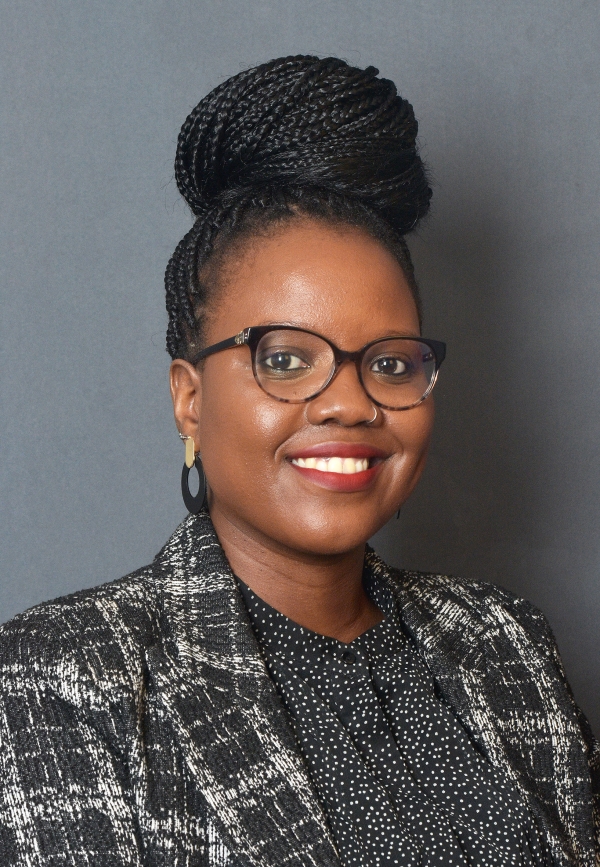
- Position Economist
Dr Simbarashe Mhaka

- Position Economist
Import Tracker Q2 2024
Neva Makgetla: Eskom the 800-pound gorilla that does what it wants
Business Day - 8 October 2024 by Neva Makgetla
Options for long steel: An evaluation
- Year 2024
- Organisation TIPS
- Author(s) Neva Makgetla
- Countries and Regions South Africa
Carbon-intensive power will hinder local manufacturers
Carbon-intensive power will hinder local manufacturers
Engineering News 18 October 2024 by Halima Frost
Read online at Engeneering News
NEVA MAKGETLA: Investment malaise has its roots in inequality
Neva Makgetla: Investment malaise has its roots in inequality
Business Day 22 October 2024 by Neva Makgetla
Think-tank warns state actions will seal Sasol’s fate
Think-tank warms state actions will seal Sasol's fate
Business Day 22 October 2024 by Kabelo Khumalo
Or read as PDF
Sasol’s gas supply and volatile oil raise sustainability risks
Sasol's gas supply and volatile oil raise sustainability risks
By Bloomberg News 18 October 2024
Read online at Money Web
SA faces urgent need for carbon compliance as EU deadline approaches
IOL 24 October 2024 by Banele Ginindza
Read online at IOL
Industrial Policy in Context: An Overview of NIPF and IPAPs
- Author(s) Lucas Mthembu
TIPS highlights positive second-quarter trade, investment movements
Engineering News 29 October 2024 by Marleny Arnoldi
- Author(s) Nokwanda Maseko
New report shows depth of Sasol Secunda distress
New report shows depth of Sasol Secunda distress
BizCommunity 28 October 2024 by Lindsey Schutters
Sasol not in ‘sunset’ phase but transition plans cannot outpace market demand – Baloyi
Sasol not in ‘sunset’ phase but transition plans cannot outpace market demand – Baloyi
Engineering News 5 November 2024 by Terence Creamer
A policy primer for green industrialisation in South Africa
- Author(s) Gaylor Montmasson-Clair, Muhammed Patel
ANNUAL TIPS FORUM Seminar
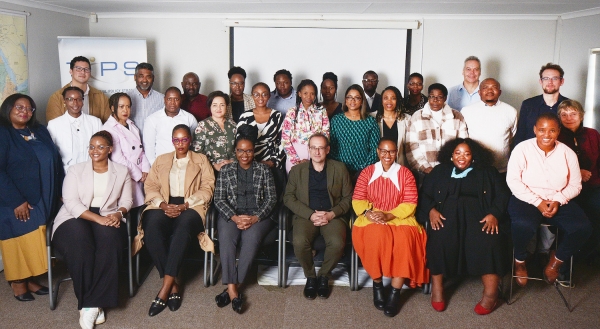
The TIPS Annual Forum is a platform for researchers, policymakers and other stakeholders to present research and engage in dialogue on policy-relevant issues hosted by TIPS. The Forums have overarching themes and have been running since 1997. For details of past Forums and copies of research presented, go to Forum Papers. TIPS is partnering with, and receiving financial support for the Forum from, the DSI/NRF South African Research Chair in Industrial Development (SARChI) based at the University of Johannesburg. The Forum will be undertaken in association with the Department of Trade Industry and Competition (the dtic).
Looking ahead, inclusive industrialisation requires more decisive industrial policy interventions. Policy-orientated research is required to better understand the political-economy impacts, the socio-economic costs to society, and appropriate strategies and measures. The Forum offers the opportunity for collective critical analysis of possible solutions considering related opportunities and challenges, and further actions on broad themes of industrial policy and inclusive growth, such as:
- Building and enabling a small business ecosystem
- The production structure in South Africa
- Education, training and skills constraints within small and medium manufacturing enterprises
- The Master Plans, localisation, and other industrial policy instruments
- The climate emergency and the Just Transition
- Promoting green industrialisation among small businesses
- The quality and affordability of infrastructure
- Innovation in SMEs
- Technological change
- Strategies to promote more inclusive growth
- The AfCFTA and global trade
- Integration into regional value chains (within SADC)
Who can attend?
The Forum is a platform for researchers, policymakers and other stakeholders to present research and engage in dialogue on policy-relevant issues. Government officials and others who contribute to policy are targeted by the Forum but all are welcome, though places are limited.
APORDE PROGRAMME
The African Programme on Rethinking Development Economics (APORDE) hosted by TIPS offers a platform to share views and ideas on specific development issues and alternative policy strategies. APORDE is a high-level training programme in development economics which aims to build capacity in economics and economic policymaking. The course is run for two weeks and consists of lectures and seminars taught by leading international and African economists. Though the has been designed for government officials for whom the themes tackled are of relevance, APORDE allows talented academics, policymakers and civil society representatives from Africa to gain access to alternatives to mainstream thinking on development issues and to be equipped in a way that will foster original thinking. Participants receive intensive high-level training and interact with some of the best development economists in the world and with other participants from across the continent.
Africa is probably the continent most affected by the poor availability of cutting-edge research and teaching in economics. While only a few African countries have experienced sustained economic development in the past 50 years, African governments and civil societies have in the past been weakly equipped to respond critically to external initiatives aimed at their development and to generate endogenous strategies. The tide is, however, gradually turning in South Africa and in other African countries, the need for “more” (rather than merely “better”, which has often proved to mean “less”) state intervention in economic affairs is increasingly recognised. Crucially, economic take-off and converting growth spurts into sustained periods of structural change appear bound to remain a pipedream unless it is premised on developmental policy. However, African decision-makers are often not exposed to alternatives to mainstream policy design and implementation strategies, a gap which APORDE aims to help fill. APORDE covers essential topics in development economics, including industrial policy, rural poverty, inequality and financialisation. Lectures will equip participants with key information pertaining to both mainstream and critical approaches. The programme will mostly consist of daytime lectures, as well as several shorter evening talks and debates.
Previous APORDE sessions included lectures on:
- Critical Perspectives on Development Economics
- Market, State and Institutions in Economic Development
- Governance, Democracy and Economic Development
- Globalisation, Global Value Chains and Regional Value Chains
- Trade and Industrial Policy
- Agriculture, Economic Development and Land Reform
- Gender, Development and Growth
- International Financial Flows
- Industrial Development in Africa, East Asia, South Asia, Latin America
- Mineral Resources and Industrial Policy
- Industrial Policy in South Africa
Previous lecturers included:
- Ha-Joon Chang (SOAS, University of London)
- Mushtaq Khan (SOAS, University of London)
- Chris Cramer (SOAS, University of London)
- Fiona Tregenna (University of Johannesburg)
- Adeyemi Dipeolu (Government of Nigeria)
- Judith Fessehaie (International Trade Centre)
- Mwangi wa Gĩthĩnji (University of Massachusetts-Amherst)
- Faizel Ismail (University of Cape Town)
- Nimrod Zalk (South African Department of Trade, Industry and Competition)
Who can attend?Usually hosted in South Africa at a venue in late September, annually, the call to enter to be part of the prestigious programme is directed at talented economists, policymakers, academics and civil society activists who, if selected, will be fully funded to participate in the course. Places are limited. (add the link page to Aporde https://www.aporde.co.za/)
IPPM PROGRAMME
The Industrial Policy for Policy Makers (IPPM) programme takes place, alongside the annual African Programme on Rethinking Development Economics (APORDE).
The five-day intensive training course is focused on Industrial Policy and consists of lectures and seminars by leading international and African economists. It is of particular relevance given:
- The slow pace of industrial development on the African continent and the threat of premature deindustrialisation.
- The increasing threat posed by climate change and the impact of and opportunities arising from a shift to a low carbon economy.
- The increasing relevance and need for green industries.
- Challenges in financing green industrial policy.
- Discussions about the most appropriate strategies to advance structural transformation and regional integration under the African Continental Free Trade Area (AfCFTA)
Who can attend?
Applicants should be senior government officials in African countries working in economic ministries, departments, or other public institutions, or supranational policy institutions in Africa. In particular, we encourage applications from officials working on issues such as industrial policy, green industries, trade, development banking or climate change/environmental policies. Participants need to be proficient in English. There is no charge to attend the training; however, due to limited places, applicants will be accepted through a competitive application process. South African participants, or their institutions, will be required to cover their own transport and accommodation costs. Participants from other countries will have their travel and accommodation costs covered by the programme.