

Janet Wilhelm
Charity begins at home - The political economy of non-tariff barriers to trade in Southern Africa
WIDER Working Paper 2019/61
This working paper, Charity begins at home The political economy of non-tariff barriers to trade in Southern Africa, forms part of the project: Southern Africa – Towards Inclusive Economic Development (SA-TIED)
Abstract
Increased intra-regional trade in southern Africa will have a positive impact on eonomic growth. However, this requires a shifting of loyalties from the national to the regional.Tension between the goals of long-term regional development and shorter-term national imperatives remains unresolved. This study presents a review of recent and current local content regulation (LCR) initiatives across a sample of the South African Development Community countries. LCRs are widely used across these countries, and their use has increased recently. Evidence suggests that the impact of LCRs is mixed, depending on their national context, whether or not they are implemented in line with the genuine desire to deliver local development, and whether they can remain corruption-free. LCRs may have long-term positive domestic and regional benefits, if they support sustainable local enterprise development and employment. In time this should translate into higher levels of growth across the region, and thus drive higher levels of trade.
Download Working Paper: https://www.wider.unu.edu/sites/default/files/Publications/Working-paper/PDF/wp-2019-61.pdf
TIPS acknowledges the support of the SA-TIED programme for this working paper, with special thanks to UNU-WIDER and the South African Department of Trade and Industry.
The third Partnership for Action on the Green Economy (PAGE) Ministerial Conference was held in Cape Town in January 2019. The theme of the conference was Advancing Inclusive and Sustainable Economies. More than 500 leaders and innovators from the government, private and the civil society sectors from more than 50 countries met to discuss policy and strategy. The conference was hosted by the Department of Environmental Affairs of South Africa.
A number of concept papers were produced to inform the conference, including two by TIPS.
- Green Economy Policies & Strategies Gaylor Montmasson-Clair (TIPS)
This concept document assesses the state of play at each level of policymaking. It conducts a diagnostic of the situation at the four levels of the policy pyramid: the vision, plans and strategies,measures and instruments, and toolkits. It also has targeted recommendations. - Inclusivity within the Green Economy - Gaylor Montmasson-Clair and Shakespear Mudombi (TIPS)
A gradular understanding of the structure and role of SMMEs in development and the green economy is needed to adequately harness their potential. This concept note aims to provide this analytical framework. It investigates the role of SMMEs in the economy and society, focuses on SMMEs within a green economy context, and considers the obstacles hindering thedevelopment of SMMEs. It then formulates the need and opportunity to reframe SMME development in alignment with sustainable development principles. - Sustainable Consumption and Production - Ntombifuthi Ntuli and Stanley Semelane (CSIR Energy Centre)
This concept note takes stock of the status quo of sustainable consumption and production (SCP) implementation, particularly in the PAGE countries. It reviews the global perspective focusing on SCP application in various segments of the economy, followed by a review of the South African perspective of SCP implementation. It then looks at global best practise and at successful strategies from developed countries. - Green Finance - By Zenizeni Sustainable Finance
An understanding of how to unlock the much-needed funding is central for green economy implementation was one of the central themes of the conference. This paper provided the context to inform the planning of the conference’s green finance sessions.
The National Treasury economic policy discussion paper
In August 2019, the National Treasury released a discussion paper on economic policy for comment, titled Economic transformation, inclusive growth, and competitiveness: Towards an Economic Strategy for South Africa. The paper lists a compendium of proposals loosely arranged around six “fundamental building blocks” for sustainable growth plus a host of “growth reforms” organised into five themes. This briefing note first reviews the shortcomings in policy development procedures that lead to the repeated publication of bloated and ineffective economic strategies. It then briefly reviews some of the proposals in the text with an appendix that lists all the recommendations and provides some responses. Finally, the concluding section suggests a few imperatives for boosting growth in the short run.
Master Plans and industrial policy
The relaunch of industrial policy from early 2019 included proposals for Master Plans for priority industries. The Master Plan approach sets a framework for constructive engagement and implementation that can respond to changing circumstances and evidence. This policy brief draws on experience with the development of Master Plans for various sectors as well as the experience of sector strategies in the auto industry to propose a standard methodology for the process.
The Real Economy Bulletin - Second Quarter 2019
Main Bulletin: The Real Economy Bulletin - Second Quarter 2019
In this edition
GDP growth: Statistics South Africa reported rapid growth in the GDP in the second quarter, at 0.8% in actual terms – that is, 3% at an annualised rate. The data continue the increased volatility in the GDP data over the past five years. The data also again raise questions about the seasonal adjustment of the quarterly GDP data. Read more.
Employment: After a sharp fall in the first quarter, employment in the real economy was essentially stable in the year to the second quarter of 2019. It is now at the same level it was in 2015. Read more.
International trade: Both imports and exports increased between the first and second quarters. Only marginal growth was observed compared to the same period last year. Read more.
Investment and profitability: Investment fell almost 2% in year-on-year terms through the second quarter of 2019, although it showed a sharp recovery in the past quarter. The decline was due entirely to a fall in public sector investment over the year, with gains in the second quarter of 2019 reflecting a steep improvement in private business investment. Read more.
Foreign direct investment projects: The TIPS FDI Tracker tracks foreign direct investment projects, analysing new and updated projects quarterly. Based on media monitoring, it added 17 projects this quarter – the bulk of which came to completion – while one project was updated. Read more.
Briefing note: Seasonality in the GDP data: According to official Statistics South Africa GDP data, even after adjusting the data to remove seasonal variations, the economy contracted in the first quarter of 2019 in five of the six years from 2014 to 2019. In contrast, the economy reportedly shrank just twice in the second quarter, once in the third quarter, and not at all in the fourth. These data point to an extraordinary shift in the GDP data, with the emergence of an annual cycle in the seasonally adjusted quarterly figures.Read the briefing note online: Seasonality in the GDP data.
Briefing note: Industry Master Plan methodology: The relaunch of industrial policy from early 2019 included proposals for Master Plans for priority industries.This briefing note draws on experience with the development of Master Plans for various sectors as well as the experience of sector strategies in the auto industry to propose a standard methodology for the process. Read the briefing note online: Industry Master Plan methodology. For a more detailed discussion of this topic see TIPS Policy Brief Master Plans for industrial policy.
Briefing note: Brexit and South African trade: The current disarray in British politics centres on the nature of Brexit, with no consensus in sight either on how it should be achieved, or on the UK’s future relationship with the EU. The new Prime Minister has faced strong resistance to a no-deal exit, but it is not clear what proposals could achieve a majority in Parliament, much less support from most British citizens. Because the UK is still one of South Africa’s major trading partners, the final outcome will have significant implications for our own economyRead the briefing note online: Brexit and South African trade.
Briefing note: FDI that supports development priorities – Measuring the “quality” of foreign direct investment: The intensified drive to increase investment raises the question of “quality” of FDI into South Africa. That in turn points to the importance of developing tools or mechanisms to assess FDI, with the aim of maximising its benefits towards achieving inclusive industrialisation. It is important to understand the extent to which projects contribute to South Africa’s development priorities – at a granular level, essentially being able to measure their value-add against developmental priorities. Read the briefing note online: FDI that supports development priorities.
FDI Tracker - Q1 2019
Investment monitoring for the first quarter of 2019 added 16 new projects. Based on the available investment value data, a total investment value of R146.6 billion accrued from seven projects. Six projects were updated in the FDI Tracker. Five projects were updated this quarter, having either come to completion or moved to a new stage in the project.
APORDE 2019: Public lectures
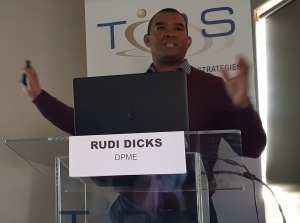
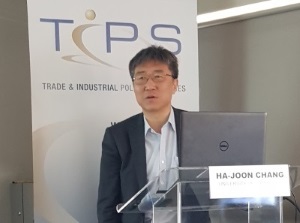
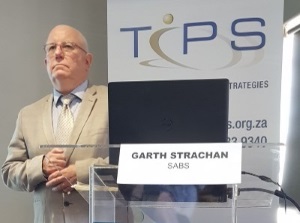
APORDE is a two-week high-level annual seminar that brings together academics, policymakers and civil society representatives to investigate economic development options. It is aimed at building capacity in the South, particularly in Africa and founded on the need to broaden perspectives on development thinking and policymaking.
Lectures open to the public:
1. Alice Amsden Memorial Lecture
Alice Amsden and the escape from empire: Implications for the financing of late industrialisation after three decades of hyperglobalisation
Speaker: Stephanie Blankenburg (UNCTAD)
Date: Tuesday 3 September 2019
Time: 18h30
Venue: Auditorium, Industrial Development Corporation, 19 Fredman Drive, Sandton
Co-host: Industrial Development Corporation
RSVP: Rozale@tips.org.za
For more information go to Alice Amsden Memorial Lecture.
2. Inclusive industrialisation
Speakers: Ha-Joon Chang (University of Cambridge) and Rudi Dicks (DPME)
Date: Wednesday 4 September 2019
Time: 10h00 - 12:00
Venue: TIPS offices; 234 Lange Street Pretoria
Co-host: Trade and Industrial Policy Strategies
RSVP: Daphney@tips.org.za
For more information go to Development Dialogue: Inclusive Industrialisation.
3. Political settlements and feasible anti-corruption strategies
Speakers: Mushtaq Khan (SOAS), Antonio Andreoni (SOAS), and Nimrod Zalk (the dti)
Date: Thursday 5 September 2019
Time: 14h00 - 16:30
Venue: Auditorium, Industrial Development Corporation, 19 Fredman Drive, Sandton
Co-hosts: Department of Trade and Industry, the University of Johannesburg's Centre for Competition Regulation and Economic Development, Trade and Industrial Policy Strategies, and University of Cape Town's Nelson Mandela School of Public Governance
RSVP: YDavis@thedti.gov.za
For more information go to Political settlements and feasible anti-corruption strategies
4. Chinese firms and employment dynamics in Africa: a comparative analysis
Speaker:Speaker: Carlos Oya (SOAS)
Date: Monday 9 September 2019
Time: 17h30
Venue: JBS Tower, Corner of Barry Hertzog and Empire Roads (entrance Napier Road)
Co-host: DST/NRF South African Research Chair in Industrial Development based at the University of Johannesburg
RSVP: nabilanm@uj.ac.za
For more information go to Chinese firms and employment dynamics in Africa
5. Finance and structural change
Speakers: Seeraj Mohamed, Ben Fine (SOAS), Jonathan di John (SOAS)
Date: Tuesday 10 September 2019
Time: 18h30
Venue: Auditorium, Industrial Development Corporation, 19 Fredman Drive, Sandton
Co-host: Institute for Economic Justice
RSVP: Rozale@tips.org.za
For more information go to Finance and structural change
Business Day - 6 August 2019 by Neva Makgetla (TIPS Senior Economist)
Read online at Business Day.
Or read as a PDF.
Greener economy good for small business and climate change
Business Day - 1 August 2019 by Gaylor Montmasson-Clair (TIPS senior economist)
Reserve Bank must be credible and independent
City Press - 31 July 2019
Read online at City Press.