

Administrator
Export Tracker - Q1 2024
South Africa’s exports continued to decline in the first quarter of 2024, after falling for two consecutive quarters. In Q1 2024, South African exports fell by 7.8% year-on-year, from R510 billion in Q1 2023 to R470 billion (in constant 2024 prices). On a quarter-to-quarter basis, exports declined by 10%, down from R525 billion in Q4 2023. This decline was mainly driven by the reduced demand from key markets such as Asia, North America, and the Middle East.
FDI Tracker Q2 2024
Monitoring recorded 11 projects in the second quarter of 2024. The number of projects that published investment values was limited and only three projects account for the R8 billion recorded for the quarter. Furthermore, only one project reported on employment, announcing 200 temporary jobs. The Tracker further updated 17 pre-existing projects.
IPPM PROGRAMME
The Industrial Policy for Policy Makers (IPPM) programme takes place, alongside the annual African Programme on Rethinking Development Economics (APORDE).
The five-day intensive training course is focused on Industrial Policy and consists of lectures and seminars by leading international and African economists. It is of particular relevance given:
- The slow pace of industrial development on the African continent and the threat of premature deindustrialisation.
- The increasing threat posed by climate change and the impact of and opportunities arising from a shift to a low carbon economy.
- The increasing relevance and need for green industries.
- Challenges in financing green industrial policy.
- Discussions about the most appropriate strategies to advance structural transformation and regional integration under the African Continental Free Trade Area (AfCFTA)
Who can attend?
Applicants should be senior government officials in African countries working in economic ministries, departments, or other public institutions, or supranational policy institutions in Africa. In particular, we encourage applications from officials working on issues such as industrial policy, green industries, trade, development banking or climate change/environmental policies. Participants need to be proficient in English. There is no charge to attend the training; however, due to limited places, applicants will be accepted through a competitive application process. South African participants, or their institutions, will be required to cover their own transport and accommodation costs. Participants from other countries will have their travel and accommodation costs covered by the programme.
APORDE PROGRAMME
The African Programme on Rethinking Development Economics (APORDE) hosted by TIPS offers a platform to share views and ideas on specific development issues and alternative policy strategies. APORDE is a high-level training programme in development economics which aims to build capacity in economics and economic policymaking. The course is run for two weeks and consists of lectures and seminars taught by leading international and African economists. Though the has been designed for government officials for whom the themes tackled are of relevance, APORDE allows talented academics, policymakers and civil society representatives from Africa to gain access to alternatives to mainstream thinking on development issues and to be equipped in a way that will foster original thinking. Participants receive intensive high-level training and interact with some of the best development economists in the world and with other participants from across the continent.
Africa is probably the continent most affected by the poor availability of cutting-edge research and teaching in economics. While only a few African countries have experienced sustained economic development in the past 50 years, African governments and civil societies have in the past been weakly equipped to respond critically to external initiatives aimed at their development and to generate endogenous strategies. The tide is, however, gradually turning in South Africa and in other African countries, the need for “more” (rather than merely “better”, which has often proved to mean “less”) state intervention in economic affairs is increasingly recognised. Crucially, economic take-off and converting growth spurts into sustained periods of structural change appear bound to remain a pipedream unless it is premised on developmental policy. However, African decision-makers are often not exposed to alternatives to mainstream policy design and implementation strategies, a gap which APORDE aims to help fill. APORDE covers essential topics in development economics, including industrial policy, rural poverty, inequality and financialisation. Lectures will equip participants with key information pertaining to both mainstream and critical approaches. The programme will mostly consist of daytime lectures, as well as several shorter evening talks and debates.
Previous APORDE sessions included lectures on:
- Critical Perspectives on Development Economics
- Market, State and Institutions in Economic Development
- Governance, Democracy and Economic Development
- Globalisation, Global Value Chains and Regional Value Chains
- Trade and Industrial Policy
- Agriculture, Economic Development and Land Reform
- Gender, Development and Growth
- International Financial Flows
- Industrial Development in Africa, East Asia, South Asia, Latin America
- Mineral Resources and Industrial Policy
- Industrial Policy in South Africa
Previous lecturers included:
- Ha-Joon Chang (SOAS, University of London)
- Mushtaq Khan (SOAS, University of London)
- Chris Cramer (SOAS, University of London)
- Fiona Tregenna (University of Johannesburg)
- Adeyemi Dipeolu (Government of Nigeria)
- Judith Fessehaie (International Trade Centre)
- Mwangi wa Gĩthĩnji (University of Massachusetts-Amherst)
- Faizel Ismail (University of Cape Town)
- Nimrod Zalk (South African Department of Trade, Industry and Competition)
Who can attend?Usually hosted in South Africa at a venue in late September, annually, the call to enter to be part of the prestigious programme is directed at talented economists, policymakers, academics and civil society activists who, if selected, will be fully funded to participate in the course. Places are limited. (add the link page to Aporde https://www.aporde.co.za/)
ANNUAL TIPS FORUM Seminar
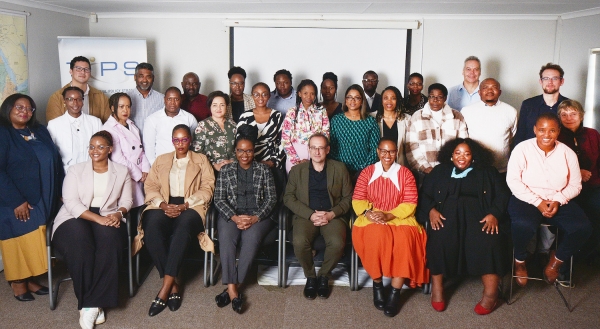
The TIPS Annual Forum is a platform for researchers, policymakers and other stakeholders to present research and engage in dialogue on policy-relevant issues hosted by TIPS. The Forums have overarching themes and have been running since 1997. For details of past Forums and copies of research presented, go to Forum Papers. TIPS is partnering with, and receiving financial support for the Forum from, the DSI/NRF South African Research Chair in Industrial Development (SARChI) based at the University of Johannesburg. The Forum will be undertaken in association with the Department of Trade Industry and Competition (the dtic).
Looking ahead, inclusive industrialisation requires more decisive industrial policy interventions. Policy-orientated research is required to better understand the political-economy impacts, the socio-economic costs to society, and appropriate strategies and measures. The Forum offers the opportunity for collective critical analysis of possible solutions considering related opportunities and challenges, and further actions on broad themes of industrial policy and inclusive growth, such as:
- Building and enabling a small business ecosystem
- The production structure in South Africa
- Education, training and skills constraints within small and medium manufacturing enterprises
- The Master Plans, localisation, and other industrial policy instruments
- The climate emergency and the Just Transition
- Promoting green industrialisation among small businesses
- The quality and affordability of infrastructure
- Innovation in SMEs
- Technological change
- Strategies to promote more inclusive growth
- The AfCFTA and global trade
- Integration into regional value chains (within SADC)
Who can attend?
The Forum is a platform for researchers, policymakers and other stakeholders to present research and engage in dialogue on policy-relevant issues. Government officials and others who contribute to policy are targeted by the Forum but all are welcome, though places are limited.
APORDE 2024 Call for Participants
APORDE is a high-level training programme in development economics which aims to build capacity in economics and economic policy-making. The course is run for two weeks and consists of lectures and seminars taught by leading international and African economists.
This call is directed at talented economists, policymakers, academics and civil society activists who, if selected, will be fully funded to participate in the course.
Applications will close on Friday 10th May 2024. Register here
Trade policy and practice
How a post-COVID-19 revival could kickstart Africa's free trade area
Article by Dr Faizel Ismail, Director of the Nelson Mandela School of Public Governance, University of Cape Town, and TIPS Research Fellow in The Conversation 26 May, 2020.
Making Britain great again! For what purpose? Implications for South Africa's future relations with the UK post-Brexit!
This paper looks at the future of South Africa-United Kingdom trade relations in the post-Brexit period. It provides a brief background and looks at the history of trade relations until the onset of democracy in1994. It then looks at SA-UK trade relations since 1994, including the negotiations the led to the Southern African Development Community-Economic Partnership Agreement. Authors: Dr Faizel Ismail and Jay Grunder.
Decreasing import customs fraud in the context of customs modernisation
This report provides background into the key approaches to customs fraud management, and outlines the processes as well as work done by the South African Revenue Service (SARS)to improve the customs environment. The report finds that as these management processes improve, there will be less physical control at border posts. While South Africa is still a way from being in such a position, the systems and the process are in place to move in that direction, and there is an important role for the Department of Trade and Industry (the dti) to play to support the decrease of customs fraud. Author: Sandy Lowitt (TIPS).
Green Economy Coalition


The Green Economy Coalition (GEC) is the largest global alliance of organisations working on a green economy. The membership spans Asia, Africa, South America, North America and Europe and represents a wide range of interests including the poorest, the environment, business, the United Nations, research and government. Despite its diversity, the coalition is committed to accelerating the transition to green and fair economies. In South Africa, Trade & Industrial Policy Strategies (TIPS) and the African Centre for a Green Economy (African Centre www.africancentre.org) are active members of the coalition. The Green Economy Coalition is supported by funding and assistance from the European Union.
TIPS in partnership with the South African Research Chair in Industrial Development, based at the University of Johannesburg, and in association with the Green Economy Coalition (GEC), hosting the 2017 Annual Forum in June, 2017. It was supported by the European Union and the Department of Trade and Industry. The theme of the Forum was Industrialisation and Sustainable Growth See Summary report of the Forum below.
GEC is also supporting the production of seven reports. Draft titles of the seven reports in production are:
- Governance for South Africa’s sustainability transition: A critical review, by Gaylor Montmasson-Clair (completed)
- A South African Strategy for trade in environmental goods, by Christopher Wood (completed)
- The role of plantation forestry for promoting sustainability in South Africa, by Struan R. Robertson (completed)
- Nature in South Africa’s transition to sustainability: A stocktake, by Shakespear Mudombi (completed)
- Transforming South Africa’s passenger transport sector for sustainable development in South Africa, by Bhavna Deonarain and Kelello Mashiane (completed)
- Water and sanitation in South Africa: Past, present, and future, by Shakespear Mudombi (completed)
- Building an environmentally-sustainable economy in South Africa, by Gaylor Montmasson-Clair
Reports
- Governance for South Africa’s sustainability transition: A critical review
- A South African strategy for trade in environmental goods
- The role of plantation forestry for promoting sustainability in South Africa
- Nature in South Africa's transition to sustainability: A stocktake
- Transforming South Africa’s passenger transport sector for sustainable development in South Africa
- Water and sanitation sustainability in South Africa: Past, present, and future
Industry 4.0
This series of four papers was commissioned by the Future Industrial Production Technologies Chief Directorate of the Department of Trade and Industry (the dti). This unit is focused on preparing South African industry for the fourth industrial revolution.
- Framing the concepts that underpin discontinuous technological change, technological capability and absorptive capacity
This paper takes the form of a literature study on the topic of technological change, innovation and building technological capabilities. - World Economic Forum and the fourth industrial revolution in South Africa
This paper focuses on the fourth industrial revolution and the concept as promoted by the World Economic Forum, international consultancies, governments and multinational firms. - Mapping the meso space that enables technological change, productivity improvement and innovation in the manufacturing sector
This paper focuses on meso organisations and policies that strengthen the technological capability of the country or an industry to enable change, adaptation and economic resilience. - Technological change and sustainable mobility: An overview of global trends and South African developments
This paper focuses on technological change and the developments in the sustainable mobility topic in South Africa.
Climate change adaptation and small business
Climate change will have drastic impacts on South Africa’s economy and society, and the need to adapt is urgent. As the country embarks on a just transition to a low-carbon, climate-resilient and environmentally-sustainable economy, an opportunity exists to develop domestic small, green businesses.
This report and five case studies are part of a broader initiative on small business development in South Africa’s climate change space, by TIPS with support and funding from the Government of Flanders. The research comprises a main report, which summarises the research findings on the topic, and five case studies on South African-based entrepreneurs active in the adaptation space: AB Farms, EWEF-SusTech, Loo Afrique, MySmartFarm and Waste Intrique.
Main report
Climate change adaption and small business – case studies
- Mogale Maleka and Tumelo Pule: Using hydrophonics to enhance food security
- Bulelwa Ntsendwana: Harnessing chemistry for sustainable development and women empowerment
- Rori Mpete: Thinking outside the box – retrofitting water saving in conventional waterborne sanitation systems
- Wolfgang von Loeper: Sustainable farming: ensuring food security while preserving the planet
- Tshego Mpete: Embracing green opportunities in the water sector
Unlocking green jobs in South Africa
The Unlocking Green Jobs: A Catalytic Intervention was a two-year collaboration between the World Wide Fund for Nature, South Africa (WWF-SA) and Trade & Industrial Policy Strategies (TIPS). Published reports include a synthesis report, Unlocking green jobs in South Africa: A catalytic intervention, which summarises the findings and three three case studies. The reports were produced with the financial assistance of the WWF Nedbank Green Trust and Agence Française de Développement (AFD).
Main report
Case studies
- Essential Amathole: A case study of unlocking green jobs in the bioprospecting sector
- Protecting and unlocking jobs through water stewardship: A case study Linked to the Umbogintwini Industrial Complex, Ethekwini
- Unlocking and retaining jobs in the alien vegetation added value chain through industrial symbiosis: Case study on wood pellets