

Administrator
Event: Thursday, 30 July 2015, 09:00 – 12:00 followed by lunch
TIPS, in association with the Department of Trade and Industry, the Embassy of Japan and Japan International Cooperation Agency (JICA), hosted this workshop to discuss the Special Economic Zone (SEZ) programme and the lessons emanating from the Asian experience. The objective of was to reflect on the policy experiences of SEZs in Asia, and to have practical discussions on relevance to South Africa. As South Africa deepens and expands its approach to using SEZ as a lever of industrial policy, it is important to understand the lessons from Asia and experiences of Japanese companies.
This workshop is part of a series that aims to highlight policy lessons from industrial development in Asia, and to have discussions with high level government officials. The Embassy of Japan was responsible for bringing out the two speakers, who both have extensive experience working in both an Asian and African context, with important insights.
Oceans economy Phakisa and maximising niche markets in aquaculture: South Africa's abalone industry
BACKGROUND
Coming out of the Malaysian experience on a ‘Big Fast Results’ methodology, South Africa ran an Operation Phakisa on the ocean economy. Operation Phakisa is a results-driven approach, involving setting clear plans and targets, on-going monitoring of progress and making these results public. The Phakisa looked at the untapped potential of South Africa’s oceans and developed a number of projects to support investment, job creation and economic development. Dr Edwin Ritchken will present on some of the key issues emerging from the Ocean Economy Phakisa.
Aquaculture was identified as a priority sector in the Oceans Economy Phakisa. Aquaculture is the fastest growing food producing sector in the world, and although abalone contributes a relatively small proportion to aquaculture, it is one of the most highly prized, premium seafood delicacies and most sought-after invertebrate. The value of total legal production in the country in 2015 totalled US$73 434 900 and is projected to rise to 135 million US dollars by 2020. The presentation by Gillian Chigumira will outline strategies and policies for the abalone industry to remain economically viable and export orientated.
PRESENTERS
Dr Edwin Ritchken – Research Associate TIPS; on the Oceans Economy
Gillian Chigumira Junior Economist – Trade and Industry TIPS; on the Abalone Industry
Edwin is a research associate with TIPS. He has worked on the Oceans and Mining Phakisas as well as the Electricity War Room. He was previously an adviser to the Minister of Public Enterprises.
Gillian is a researcher in the Industrial Development pillar at TIPS. She has been engaged in industrial policy-related studies in regional industrialisation focusing on agro-processing. Gillian Chigumira is currently completing a Masters in Commerce – focusing on agro-industrialisation. She has previously worked at SAIIA.
An Overview of TIPS Workshops on Economy-wide Analysis
Most economics curricula deal with macroeconomic tools for studying the economy as a whole and microeconomic tools for studying the behaviour of individual agents or markets. However, many policies create costs and benefits that extend beyond the targeted sectors or agents.
Furthermore, the impacts on the policy targets are themselves conditioned by the macroeconomic adjustment processes and the structures and institutions of the economy in which they are implemented. Practical public and private sector policy analysts thus often need an economy-wide perspective on the policies they design, implement and monitor.
Economic modelling techniques that capture these economy-wide impacts are increasingly being used in policy, consulting, research and academic environments. Input-output and social accounting matrix (SAM) analysis are used on a regular basis to analyse the impact of policy-related and other changes on the economy. Computable general equilibrium (CGE) models build on these techniques to allow for a wide range of behavioural responses and interactions. While these techniques were once the preserve of a handful of leading theoreticians, the IT revolution has allowed them to become part of the practical economist's everyday toolkit.
In 2001 Trade and Industrial Policy Strategies (TIPS) started (co-)presenting introductory workshops to cater for the rising demand for these techniques. Since then it has held more than thirty such workshops, with more than 500 participants from over 30 countries.
The accumulated experience of running these workshops suggests that there are three different kinds of model users, each requiring different skills. Firstly, modellers need the skills to adapt existing models for new applications and to develop new models completely. Secondly, many policy analysts need to use economy-wide models routinely in their work.
They may want to run and interpret the results of standard models dealing with their specific issues. They also may want to be able to interact with modellers when commissioning work from them. Finally, while never needing to run models themselves, many senior policy managers draw on modelling work undertaken by consultants and others. They need to know when the methods are appropriate and to be able to interrogate the results properly.
TIPS has evolved a suite of three related introductory workshops designed to meet these different needs. All three workshops focus on learning by doing. Brief presentations introduce the various topics, after which participants do hands-on exercises implementing what they have learned. There is also emphasis on the nature of the data underlying the models. Participants undertake projects dealing with typical issues, using real world data.
The first of these three workshops, Economy-Wide Policy Impact Analysis, is suitable for all three of kinds of users mentioned above. It introduces participants to input-output, SUT and SAM multiplier analysis and their extensions. These techniques are widely used to assess the likely impact of policy and other shocks to the economy. They can also form the basis for many CGE models. All the models are implemented in MS Excel.
The second workshop, Introduction to Economy-Wide Modelling for Policy Analysis, targets primarily managers and policy analysts, although it is also useful for those wishing to become modellers who want to get a taste of what it is like. It introduces participants to the key components of standard CGE models, emphasising how to use economy-wide models and the economic interpretation of their outputs, rather than the techniques of building them. The models are run using a specially developed MS Excel interface with specialised modelling software.
Finally the third workshop, Introduction to Computable General Equilibrium modelling using GAMS, specifically targets those wanting to become modellers. It introduces the participants to economy-wide model building, using specialised modelling software. While the material is driven by the economics of models, the major focus is on actual model building techniques. This workshop does not require prior knowledge of model building, but is technically more difficult than either of the other two workshops. Workshop B or equivalent is considered to be a prerequisite to participate.
The different aspects of the three workshops are summarised in Table 1. The precise content of each workshop is varied from time to time, to meet needs of specific participants and as the field evolves. Schematic outlines of the programmes are presented in Table 2.
Who should attend
Workshop A: Economy-Wide Policy Impact Analysis is suitable for senior policy managers, policy analysts and intending modellers.
Workshop B: Introduction to Economy-Wide Modelling for Policy Analysis is also suitable for senior policy managers, policy analysts and intending modellers.
Workshop C: Introduction to Computable General Equilibrium modelling using GAMS is suitable for intending modellers.
No pre-reading is required for any of these workshops and all necessary materials will be provided for the course. However, interested participants may wish to consult the following references as preliminary reading.
Suggested readings
Workshop A
Jeffrey Round 2003 "Social Accounting Matrices and SAM-based Multiplier Analysis" Chapter 14 in L A Pereira da Silva and F Bourguignon (editors) Techniques for Evaluating the Poverty Impact of Economic Policies, World Bank and Oxford University Press, September 2003. http://siteresources.worldbank.org/INTPSIA/Resources/490023-1121114603600/14017chapter14.pdf
Workshops B and C
Lofgren, H; Harris, DL & Robinson, S, 2002, A Standard Computable General Equilibrium (CGE) Model in GAMS, Microcomputers in Policy Research 5, http://www.ifpri.org/
Lofgren, H, 2003, Exercises in general equilibrium modeling using GAMS and key to exercises in CGE modeling using GAMS, Microcomputers in Policy Research 4a, http://www.ifpri.org/
TABLES: WORKSHOP SUMMARIES AND SCHEMATIC PROGRAMMES FOR WORKSHOPS
Table 1: Workshop Summaries
| Who Should Attend | Skills required | Technical content | Pre-requisites (apart from Economics) | ||
| A | Economy-Wide Policy Impact Analysis |
|
|
|
|
| B | Introduction to Economy-Wide Modelling for Policy Analysis |
|
|
|
|
| C | Introduction to Computable General Equilibrium modelling using GAMS |
|
|
|
|
Table 2: Schematic Programmes for Workshops (subject to change)
| A | B | C | |
| Economy-Wide Policy Impact Analysis | Introduction to Economy-Wide Modelling for Policy Analysis | Introduction to Computable General Equilibrium modelling using GAMS | |
| Day 1 |
|
|
|
| Day 2 |
|
|
|
| Day 3 |
|
|
|
| Day 4 |
|
|
|
| Day 5 |
|
|
|
Responses to Eskom’s request for compensation for additional costs and for lower than expected sales in 2013/4 should be designed to support industrialisation. From this standpoint, the regulator’s response to Eskom’s proposals should take into account the following.
- Eskom should be guaranteed compensation for the cost of diesel and other measures to avoid loadshedding, since otherwise it would be effectively incentivised to loadshed rather than incur additional expenses.
- The multi-year price determination (MYPD) did not foresee the structural decline in electricity demand since around 2011, largely as a result of the end of the commodity boom combined with the rapid rise in electricity tariffs, and should therefore be revised to take it into account. That in turn would affect both the scale and nature of investment in new generation capacity.
- Efforts to hold down tariffs as a way to enforce greater efficiency at Eskom have had severe unintended consequences, fostering in particular inadequate investment and maintenance. Instead, tariffs should be managed to ensure responsiveness to shifts in supply and demand and to maintain a reasonable rate of return at Eskom, as the Act requires, while the state as shareholder should work with Eskom to develop specific and practical measures to address the obvious areas of inefficiency around staffing, coal procurement, subsidies to the aluminium refineries, planning for construction and debt management.
Macroeconomic policy in times of slow growth and crisis
This briefing note considers three key questions about inflation targeting in South Africa, drawing on international experience as well as an assessment of the conceptual framework for monetary policy. First, does inflation in the low single digits promote development and growth? If not, raising interest rates at low rates of inflation may not be the optimal policy stance. Second, is inflation in South Africa a demand-side problem? If not, then raising interest rates may not be the most efficient and targeted policy tool to address the source of inflationary pressures (and may cultivate higher inflation in the future). Third, will reliance on a single monetary tool, the policy interest rate, successfully lower inflation and promote employment growth and development? If not, other tools should be sought.
Policy Brief prepared for TIPs by Stephanie Seguino, Professor, Department of Economics University of Vermont, USA, and SOAS, University of London.
TOPIC: PRESENTATION OF THE LATEST QUARTERLY MANUFACTURING BULLETIN
Economist: Trade and Industry (TIPS)
PRESENTER: XHANTI PAYI
Economist: Nascence Advisory & Research
Xhanti Payi has worked as an analyst at Investec Wealth & Investment, an Economist at Stanlib Asset Managers and was a Country Risk Manager at Standard Bank Corporate and Investment Banking. Payi has academic training from the University of Cape Town and the University of London. Currently, Payi is the MD at Nascence Advisory & Research, a strategy consulting and research outfit. He also serves on the advisory panel to the Deputy Minister of Trade and Industry.
With its strong focus on the manufacturing sector as a key driver of balanced development, the NIPF set a framework and an implementation mechanism – in the form of IPAP – for addressing cross-cutting and sector-specific constraints (and optimising opportunities) to put South Africa on a stronger growth path. This presentation explores the intended outcomes of the NIPF and assesses some of the progress (and unintended consequences) of industrial policy implementation since 2008.
PRESENTER: MBOFHOLOWO TSEDU
Assistant Programme Manager: Trade and Industry (TIPS)
Mbofholowo is an Assistant Programme Manager for the Industrial Development pillar at TIPS, primarily focused on trade and industrial policy issues. Mbofholowo has been engaged in numerous industrial policy-related studies including on designation, local content reporting, sector strategies and localisation. He also has been responsible for providing supplementary research support to TIPS’s other pillars. Mbofholowo has an economics degree from the University of Pretoria and is currently completing a MSc programme focused on Industrialisation, Trade and Economic Policy at the University of Strathclyde, Glasgow, Scotland.
A perfect storm: Migrancy and mining in the North West province
The roots of the industrial conflict in the North West province platinum mining belt in 2012 that led to the Marikana massacre cannot be found in the normal narrative of low wages and circular migrant labour entrenched under apartheid. Although South African miners earned far less than their equals in industrialised economies, their median wage was around twice as high as in other sectors in South Africa. Moreover, the miners’ migration to the North West platinum mines in the past decade differed significantly from the historic oscillating migrancy enforced by apartheid legislation before 1994.
This paper assesses the factors behind the prolonged strikes in 2012 and 2014. It finds that the key issues were:
- The failure to provide human settlements to accommodate the influx of miners as the mines expanded rapidly during the commodity boom,
- The levelling out of pay increases when the commodity boom came to an end in 2011, combined with profound inequalities in work organisation and remuneration which meant the miners did not believe the mines faced a squeeze, and
- The failure systematically to re-organise supervisory practices and work organisation in mining to deal with the oppression, poor communications and unjustified inequalities entrenched under apartheid.
To a large extent, the experience of the platinum belt paralleled challenges faced worldwide, as the surge in metals prices that lasted from the early 2000s through 2011 led to rapid growth in many mines in relatively remote rural areas. In the North West however, responses to these challenges by employers, workers, communities and the state built on practices and perceptions developed as part of the colonial and apartheid migrant labour system that historically centred largely on mining. Taken together, these responses failed to create living and working environments able to support either sustainable growth in platinum mining or secure, decent work and vibrant communities.
Dr Neva Makgetla

Neva Makgetla is a Senior Economist at TIPS. She has undertaken extensive research into South African economic issues, published widely, and contributed to a number of national economic policy processes and debates from 1994. Until 2015, she was Deputy Director General for economic policy in the Economic Development Department. Before that, she was Lead Economist for the Development Planning and Implementation Division at the Development Bank of Southern Africa. She has worked at a senior level in the Presidency and other government departments, and for seven years was head of the COSATU Policy Unit. She has a PhD in economics and before 1994 worked for over 10 years as an economics lecturer.
Dr Faizel Ismail
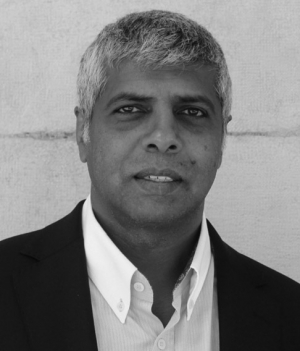
Faizel Ismail has a PhD (Manchester, UK), MPhil (IDS, Sussex, UK), LLB (UKZN-Pietermaritzburg) and a BA (UKZN-Pietermaritzburg). His PhD for which he obtained an A grade pass is titled: An Empirical Analysis of Apartheid South Africa in the GATT: 1947 to 1994.
Faizel is currently an Adjunct Professor at the UCT School of Economics. He is also an advisor/consultant (part-time) to the Department of Trade and Industry on International Trade and a Special Envoy on the African Growth and Opportunity Act (AGOA). He was appointed as the Chairperson of the International Trade and Administration Commission (ITAC) for a three-year term (2015-2018).
He has served as the Ambassador Permanent Representative of South Africa to the WTO (2010-2014). Prior to this he was the Deputy Director General for International Trade and Economic Development (ITED) in the Department of Trade and Industry. As South Africa’s Chief Trade Negotiator, since 1994, he led the new democratic South Africa’s trade negotiations with the European Union (EU), Southern African Development Community (SADC), Southern African Customs Union (SACU) and several other bilateral trading partners including the US, India, and Brazil. He has led South Africa’s negotiations in the WTO from 2002 to 2014.
He has served as the Chair of the WTO Committee on Trade and Development negotiating group (CTDSS) for two years (2004-2006), the Chair of the WTO Committee on Trade and Development (CTD) for one year (2006/7) and the Chair of the WTO Committee on Trade, Debt and Finance (WGTDF) for two years (2012-2014). He has also served as Chair of the Annual Meeting of the International Trade Centre (ITC), Geneva.
He is the author of two books on the WTO: Mainstreaming Development in the WTO. Developing Countries in the Doha Round (2007) and Reforming the World Trade Organization. Developing Countries in the Doha Round (2009). The latter book has been translated into Chinese (2011). He has published over 50 articles, chapters and working papers in international journals and books on economic development and trade and development issues.
Nimrod Zalk

Nimrod Zalk is Industrial Development Policy and Strategy Advisor at the South African Department of Trade and Industry (the dti). Prior to this he was Deputy Director-General of the Industrial Development Division of the dti. He also sits on the board of the South African Industrial Development Corporation.
Nimrod holds an MSC in Economics (with reference to Africa) from the University of London’s School of Oriental and African Studies (SOAS).
He has been involved in a range of processes related to South African and African industrial development including:
- Development and implementation of South Africa’s National Industrial Policy Framework (NIPF) and Industrial Policy Action Plans (IPAP)
- Design and implementation of key industrial policy initiatives including various sector strategies, industrial financing instruments, and leveraging procurement for industrial development.
- Development of the DTI’s sector strategy methodology
- The South African Renewables Initiative (SARi)
- Measures to deal with monopolistic behaviour in the South African economy
- Joseph Stiglitz’s Initiative for Policy Dialogue (IPD): Africa Task Force
- Ethiopian industrial development and policy
- The NEPAD process
He has authored papers on a range of topics including: industrial development and policy, competition and competitiveness, and regional economic development, and has delivered lectures on industrial development and policy at the following institutions: University of the Witwatersrand, University of Johannesburg, University of Stellenbosch and University of the Western Cape.