

Janet Wilhelm
Palesa Moitse
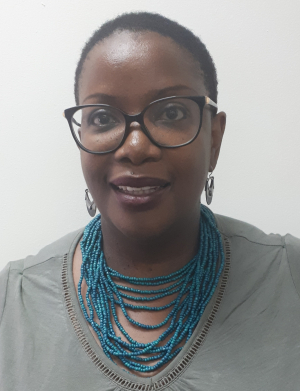
Palesa Moitse is a Senior Specialist International Trade at the South African Revenue Service. She was previously Director Trade Remedies at the Internation Trade Administration Commission (ITAC). She has more than 15 years’ experience in trade policy formulation, legal drafting and the implementation of trade rules. This work has included multilateral WTO negotiations and committee work, regional trade negotiations and bilateral trade agreements. She was the lead negotiator for the Trade Facilitation Negotiation that was adopted in Bali December 2013.
Her academic background is BA in Law and LLB from the National University of Lesotho and an LLM in Banking and Finance Law, from University College London, University of London.
Case study: Mogale Maleka and Tumelo Pule - Using hydrophonics to enhance food security
Climate change will have drastic impacts on South Africa’s economy and society, and the need to adapt is urgent. As the country embarks on a just transition to a low-carbon, climate-resilient and environmentally-sustainable economy, an opportunity exists to develop domestic small, green businesses.
This case study is part of a broader initiative on small business development in South Africa’s climate change space, by TIPS with support and funding from the Government of Flanders. The research comprises a main report, Small Business Development in the Climate Change Adaptation Space in South Africa, which summarises the research findings on the topic, as well as six case studies on South African-based entrepreneurs active in the adaptation space: AB Farms, EWEF-SusTech, Loo Afrique, MySmartFarm, Waste Intrique, and Isidima.
Main report
Small Business Development in the Climate Change Adaptation Space in South Africa
Climate change adaption and small business – case studies
Bulelwa Ntsendwana: Harnessing chemistry for sustainable development and women empowerment
Wolfgang von Loeper: Sustainable farming: ensuring food security while preserving the planet
Tshego Mpete: Embracing green opportunities in the water sector
Media article: Mail & Guardian 7 June 2019
Case study: Rori Mpete - Thinking outside the box, retrofitting water saving in conventional waterborne sanitation systems
Climate change will have drastic impacts on South Africa’s economy and society, and the need to adapt is urgent. As the country embarks on a just transition to a low-carbon, climate-resilient and environmentally-sustainable economy, an opportunity exists to develop domestic small, green businesses.
This case study is part of a broader initiative on small business development in South Africa’s climate change space, by TIPS with support and funding from the Government of Flanders. The research comprises a main report, Small Business Development in the Climate Change Adaptation Space in South Africa, which summarises the research findings on the topic, as well as six case studies on South African-based entrepreneurs active in the adaptation space: AB Farms, EWEF-SusTech, Loo Afrique, MySmartFarm, Waste Intrique and Isidima,.
Main report
Small Business Development in the Climate Change Adaptation Space in South Africa
Climate change adaption and small business – other case studies
Mogale Maleka and Tumelo Pule: Using hydrophonics to enhance food security
Bulelwa Ntsendwana: Harnessing chemistry for sustainable development and women empowerment
Wolfgang von Loeper: Sustainable farming – ensuring food security while preserving the planet
Tshego Mpete: Embracing green opportunities in the water sector
Media article: Mail & Guardian 7 June 2019
Case study: Wolfgang von Loeper - Sustainable farming, ensuring food security while preserving the planet
Climate change will have drastic impacts on South Africa’s economy and society, and the need to adapt is urgent. As the country embarks on a just transition to a low-carbon, climate-resilient and environmentally-sustainable economy, an opportunity exists to develop domestic small, green businesses.
This case study is part of a broader initiative on small business development in South Africa’s climate change space, by TIPS with support and funding from the Government of Flanders. The research comprises a main report, Small Business Development in the Climate Change Adaptation Space in South Africa, which summarises the research findings on the topic, as well as six case studies on South African-based entrepreneurs active in the adaptation space: AB Farms, EWEF-SusTech, Loo Afrique, MySmartFarm, Waste Intrique, and Isidima.
Main report
Small Business Development in the Climate Change Adaptation Space in South Africa
Climate change adaption and small business – case studies
Mogale Maleka and Tumelo Pule: Using hydrophonics to enhance food security
Bulelwa Ntsendwana: Harnessing chemistry for sustainable development and women empowerment
Tshego Mpete: Embracing green opportunities in the water sector
Media article: Mail & Guardian 7 June 2019
Climate change will have drastic impacts on South Africa’s economy and society, and the need to adapt is urgent. As the country embarks on a just transition to a low-carbon, climate-resilient and environmentally-sustainable economy, an opportunity exists to develop domestic small, green businesses.
This case study is part of a broader initiative on small business development in South Africa’s climate change space, by TIPS with support and funding from the Government of Flanders. The research comprises a main report, Small Business Development in the Climate Change Adaptation Space in South Africa, which summarises the research findings on the topic, as well as six case studies on South African-based entrepreneurs active in the adaptation space: AB Farms, EWEF-SusTech, Loo Afrique, MySmartFarm, Waste-Intrique, and Isidima.
Main report
Small Business Development in the Climate Change Adaptation Space in South Africa
Climate change adaption and small business – other case studies
Mogale Maleka and Tumelo Pule: Using hydrophonics to enhance food security
Bulelwa Ntsendwana: Harnessing chemistry for sustainable development and women empowerment
Wolfgang von Loeper: Sustainable farming: ensuring food security while preserving the planet
Media article: Mail & Guardian 7 June 2019
The Real Economy Bulletin - Second Quarter 2020
The bulletin is a review of quarterly trends, developments and data in the real economy, together with analysis of the main manufacturing industries. Briefing notes in this issue are on The 2019 budget and industrialisation; and Unlocking the potential of renewable energy for public sector and communities. See The Real Economy Bulletin - Second Quarter 2020.
Cost issues in inclusive finance
Opening session: Guest speaker
Session 1: Financialisation and industrial policy
Changing lending patterns in Sub-Saharan Africa - financial deepening or financialisation?
Session 1: Financialisation and industrial policy
The growth of industrial parks in Uganda. the role of industrial policy and investment finance
Session 2: Finance for local development