tipslogo2c

Administrator

the real economy bulletin

The Real Economy Bulletin - Third Quarter 2015: pdf

Growth in the GDP and employment: In the past quarter manufacturing showed a significant recovery, although both mining and agriculture contracted. Read more

Trends in trade: In US dollar terms, exports declined in the past year, but rapid depreciation means they have generally increased in rand terms. Within manufacturing, the past quarter saw higher exports from wood and paper and to a lesser extent from auto, but chemicals exports dropped sharply. Imports declined in both dollar and rand terms over the year to the third quarter of 2015. Read more

Profitability and investment: In the second quarter of 2015 — the latest available — mining as a whole made a loss, but construction saw a higher return on capital. Investment trended down in mining compared to 2014, but increased in manufacturing. Read more

What's behind the trends? Slower growth in the real economy mostly resulted from the end of the commodity boom, with a sharp downturn in mining and metals refineries. Still, within manufacturing, electrical equipment and most consumer goods industries have done well in the past six months, essentially due to the national build programme, the more competitive exchange rate, and the end of loadshedding. Agriculture and agro-processing have, however, been slowed by the drought. Read more

Electricity and the carbon tax: Lower production by the main metals refineries means loadshedding has ended, although breakdowns at municipal level still cause unpredictable blackouts. The National Treasury's proposed carbon tax aims ultimately to make coal and oil more expensive fuels. Although it is being initially introduced at a low rate, to achieve the desired outcome would require a fundamental shift in the structure of manufacturing. Read more

Manufacturing Competitiveness Enhancement Programme in context: The recent freeze on applications to the dti’s MMCEP stirred controversy. The short-term decision to end applications essentially reflects increasing efficiency in the dti approval processes. In the medium term, however, Treasury's current efforts to reduce state spending seem likely to bring to a halt the past decade’s rapid growth in the resources available for the incentive. Read more

TOPIC: PRESENTATION OF THE LATEST QUARTERLY MANUFACTURING BULLETIN
 
The quarterly manufacturing bulletin is an initiative of the Manufacturing Circle. It provides an analysis of trends in the South African manufacturing sector. This development dialogue will present the third quarter manufacturing bulletin with the aim of informing policy and facilitating discussion around strategies to support the manufacturing sector in ways that support employment and equitable economic growth.

PRESENTER: BABA-TAMANA GQUBULE
Economist: Trade & Industrial Policy Strategies

Baba-Tamana Gqubule has a Masters in Development Studies from the School of Oriental and African Studies (SOAS), University of London and a Bachelor of Economics Honours degree from Rhodes University. She has experience as a Policy Analyst at the Economic Development Department. She was involved in developing policies aimed at broadening participation in the economy with a specific focus on conducting research to inform the Department’s strategy towards increasing the participation of Women in the economy.   
 
TOPIC: THE END OF THE COMMODITY BOOM: SOME IMPLICATIONS FOR THE SOUTH AFRICAN ECONOMY

From 2011, the decade-long commodity boom ended, with sharp falls in the international prices of South Africa’s main mining exports – platinum, iron ore, coal and gold. This development dialogue will explore some key implications for South Africa, including the effects on manufacturing, tax revenues, infrastructure investment, and the policy discourse.

PRESENTER: DR NEVA MAKGETLA
Programme Manager: Trade & Industry (TIPS)

Neva Makgetla was previously the Deputy Director General for economic policy in the Economic Development Department. Prior to that she was the Lead Economist for the Development Planning and Implementation division at the Development Bank of Southern Africa. She has worked at a senior level in the Presidency, Department of Public Service and Administration, the Department of Labour as well as in COSATU.  She has a PhD in economics and has worked for over 10 years as an economics lecturer.

Kate Philip, Development Strategist at TIPS

City Press, September 27, 2015

Read more

SPEAKER: UMA ADUSUMILLA

Uma Adusumilli has been heading the Regional Planning department in the Mumbai Metropolitan Region Development Authority (MMRDA), an institution that has wide scope for Regional Planning & Development, Financing, Institution Building and Co-ordination for the last eleven years.  Prior to that, she worked for 15 years as an Urban Planner with the City and Industrial Development Corporation of Maharashtra (CIDCO), a new town planning and development agency, on the project of planning and development of Navi Mumbai newtown.

She holds a Masters Degree in Planning from the School of Planning and Architecture, New Delhi, India (1987) and also a M.Sc in Urban Housing Management from IHS, Rotterdam, The Netherlands and the Lund University of Sweden (2003).

She had a career spanning over 26 years across the  spectrum of spatial planning with focus on housing, urban and regional planning. In addition to her career in the public sector, she has been involved in research, representing India in the International Comparative Research projects between 1995 and 2004 on housing for the low income groups with emphasis on land supply, regulatory framework and partnerships.

18 January 2016

Myriam Velia

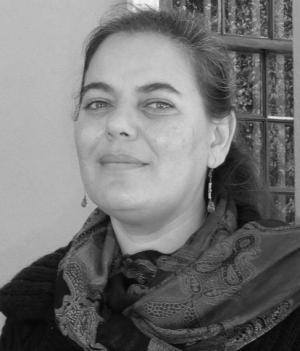
Myriam Velia is a lead researcher at the School of Built Environment and Development Studies at the University of KwaZulu-Natal. She has a PhD in International Economics from Sussex University, UK. She has worked on a range of projects for a number of funders over the years. She is currently involved in sectoral and industrial research.

Myriam was Head of Research at TIPS between February 2008 and March 2012.

As part of its dialogue work TIPS organises regular Development Dialogue Seminars and the TIPS Annual Forum. Having built up experience of running more than 15 economic conferences over the past 20 years, TIPS can also be contracted to organise economic conferencesfor other organisations.

Services provided include:

  • Co-ordinating call for papers and registration
  • Designing invitation and name badges
  • Sourcing venues
  • Meeting with service providers and negotiating rates
  • Sourcing service providers for translations, equipment, entertainment, printing, décor, promotional and corporate gifts
  • Selecting menus
  • Arranging theme dinners
  • Organising visas  
  • Arranging international and local travel logistics
  • Organising tours and site visits

Experience

Conferences organised by the TIPS Event Management Team include:

  • ERLN Conference 2016: Economic Development for Employment: Sub-national Strategies, November 2016. Hosted by the Government Technical Advisory Centre and the Economies of Regions Learning Network (ERLN) in partnership with the University of Johannesburg. 
  • ERLN Conference 2015: Economic Development at the Sub-National Level, October 2015. Hosted by the Government Technical Advisory Centre and the Economies of Regions Learning Network (ERLN) in partnership with the University of the Witwatersrand’s Development Studies Programme.
  • Manufacturing Led Growth for Employment & Equality, May 2014. Hosted by the South African Economic Development Department, Department of Trade and Industry and Department of Performance Monitoring and Evaluation, in partnership with the European Union Delegation to South Africa.
  • Project managed and coordinated the Partnership for Economic Policy (PEP) Conference: 10th General Meeting in South Africa, May, 2013.
  • UNU WIDER, GAPP Technical Workshop April, 2013 (Held at TIPS for client)
  • Department of Public Enterprises Supplier Development Summit, March, 2013  (Joint co-ordinator)
  • Green Economy Workshop in Tanzania, March, 2013 (Joint co-ordinator with IDRC at Southern Sun in Dar es Salaam)
  • South African Economic Regulators Conference, August, 2012 (at Southern Sun OR Tambo)
  • Geographical Indicators Workshop, February 2012 (Joint co-ordination with Foreign and Commonwealth Office and the Department of Trade and Industry)
  • Community Work Programme:
    • Leadership Course
    • Financial Workshop
    • Inception Workshop
  • Improving Competitiveness for Job Creation: Technology, Access to Finance and Industrial Policy Conference, October 27, 2011 (by TIPS and World Bank at the Development Bank of Southern Africa)
The Provincial Economic Intelligence Unit's (PEIU's) objectives are to develop sub-national economic analysis capacity so as to inform Provincial Growth and Development Strategy processes.

Western Cape Province

Western Cape Provincial Treasury Provincial Economic Review & Outlook 2006

The Western Cape Provincial Treasury publishes an annual Provincial Economic Review and Outlook to deepen the economic analytical platform that informs the Province's annual budget decisions.

In line with the Provincial Growth and Development Strategy, the 2006 PER&O stresses the importance of defining the desired form of growth that Government seeks to stimulate, and builds a deeper understanding of what shared growth and integrated development means for the Province.

First, it recognises that economic growth that is accompanied by improved social equity will have a greater impact on reducing poverty than growth that leaves distribution unchanged. Secondly, it highlights that increased social inequality can offset the benefits of growth to the poor, reducing the poverty impact of future growth. Thirdly, it emphasises that growth has to be environmentally sustainable to have medium- to long-term benefits for reduced poverty and improved livelihoods.

TIPS project-managed and edited PER&O 2006.

Download


Western Cape Provincial Treasury Provincial Economic Review & Outlook 2005
 
The Western Cape Provincial Treasury publishes an annual Provincial Economic Review and Outlook to deepen the economic analytical platform that informs the Province's annual budget decisions.

PER&O 2005 considers the economic outlook for the Western Cape over the next three years, examines the Province' sectoral growth and employment trends and prospects, reviews Provincial labour market and remuneration performance and highlights the Province's challenges in respect of equity and development prospects.

TIPS project-managed and edited PER&O 2005.

Download


Provincial Focus on SMMEs

Annual Small Business Review 2004 Provincial Profile: Mpumalanga

As part of the dti-commissioned Annual Review of Small Business in 2004, TIPS prepared a provincial focus on SMMEs for Mpumalanga.

Similar to other South African provinces with a high proportion of rural dwellers, the largest proportion of enterprises in Mpumalanga are informal rather than formal businesses (an estimated 15,000 formal businesses compared to 191,000 informal enterprises). Overall, the provincial government of Mpumalanga considers the SMME economy as '˜a vital part of the provincial economy'™. Nevertheless, given the challenges faced in terms of SMME development, it has been described as '˜a marginalised sector of the regional economy, not contributing optimally to economic growth'.

The aim of this report is to provide a profile of the status and development trajectory of Mpumalanga's SMME economy and to highlight select issues concerning the development challenges faced by sections of this economy. More specifically, this report presents the findings of 90 interviews which were conducted from September to November 2005 with a cross-section of SMME entrepreneurs in the manufacturing and tourism sectors.

For the full Annual Review of Small Business 2004, please visit www.tips.org.za/research-archive/trade-and-industry/small-enterprise-development.

Download


Annual Small Business Review 2003 Provincial Profile: Free State
 
As part of the dti-commissioned Annual Review of Small Business 2003, TIPS prepared a provincial focus on SMMEs for the Free State.

During 2003 and 2004, the Free State Province commissioned a series of detailed research investigations towards the creation of a new provincial economic development strategy. In this provincial profile, some of the key findings and issues from these research investigations are raised concerning SMME development, specifically in the important manufacturing economy. Issues are discussed in terms of the role of both established and emerging manufacturing enterprises.

For the full Annual Review of Small Business 2003, please visit www.tips.org.za/research-archive/trade-and-industry/small-enterprise-development.

Download

While TIPS’s core work is for government departments, it works with a wide variety of clients, beneficiaries and partners in the public sector, the private sector, the trade union movement, academia and the donor community. It also works with various organisations beyond the continent, and has working relationships with a network of local and international academics and experts.  

{slider SOUTH AFRICAN GOVERNMENT}

City of Johannesburg - www.joburg.org.za

Cooperative Governance and Traditional Affairs - www.cogta.gov.za

Competition Commission South Africa - www.compcom.co.za

Department of Environmental Affairs - www.environment.gov.za

Department of Planning, Monitoring and Evaluation in the Presidency ­- www.dpme.gov.za

Department of Public Enterprises - www.dpe.gov.za

Department of Science and Technology - www.dst.gov.za

Department of Trade and Industry (the dti) - www.thedti.gov.za

Economic Development Department – www.economic.gov.za

Government Technical Advisory Centre - www.gtac.gov.za

National Treasury - www.treasury.gov.za

{slider INTERNATIONAL ORGANISATIONS}

Centre for Economic Policy Research (CEPR) - http://cepr.org

Global Green Growth Institute (GGGI) - http://gggi.org

International Labour Organization (ILO) – www.ilo/org

Organisation for Economic Co-operation and Development (OECD) - www.oecd.org

Overseas Development Institute (ODI) - www.odi.org

Partnership for Economic Policy (PEP) - www.pep-net.org

School of Oriental and African Studies, University of London (SOAS) - www.soas.ac.uk

United Nations Conference for Trade and Development (UNCTAD) - http://unctad.org

United Nations Development Programme (UNDP) - www.undp.org

United Nations University World Institute for Development Economics Research (UNU-WIDER) - www.wider.unu.edu

{slider REGIONAL ORGANISATIONS}

African Competition Forum - www.africancompetitionforum.org

Southern African Customs Union (SACU) (Secretariat and Member States) - www.sacu.int

Southern African Development Community (SADC) Secretariat (Regional Trade) - www.sadc.int

Southern African Development Network Partners - including the University of Mauritius (UoM) and Borswana Institute for Development Policy Analysis (BIDPA) and the African Economic Research Consortium (AERC)

www.uom.ac.mu

www.bidpa.bw

http://aercafrica.org

{slider INSTITUTIONS, UNIVERSITIES AND ORGANISATIONS}

TIPS works with a range of institutions, universities and research organisations

Development Bank of Southern Africa (DBSA) – www.dbsa.org

Financial Intelligence Centre (FIC) - www.fic.gov.za

Industrial Development Corporation (IDC) – www.idc.co.za

Manufacturing Circle - www.manufacturingcircle.co.za

National Economic Development and Labour Council (NEDLAC) - new.nedlac.org.za

North West University (Economics) - www.nwu.ac.za

Public affairs Research Institute (PARI) - http://pari.org.za

Small Enterprise Finance Agency (SEFA) – www.sefa.org.za

tralac - www.tralac.org

University of Johannesburg (Centre for Competition Regulation and Economic Development, CCRED, and Economics Department)

www.competition.org.za

www.uj.ac.za/faculties/fefs/economics

University of the Witwatersrand (Economics Department, CSID, CLEAR, Development Studies) - www.wits-ac.za

University of Cape Town (DPRU, Economics Department, REDI 3x3) – www.uct.ac.za

University of KwaZulu-Natal (Economics) - economics.ukzn.ac.za

WWF- www.worldwildlife.org

{slider CURRENT AND PAST DONORS}

AusAID/Department of Foreign Affairs and Trade - http://dfat.gov.au/aid/Pages/australias-aid-program.aspx

British High Commission (BHC) - www.gov.uk/government/world/organisations/british-high-commission-pretoria

Department for International Development (DFID) - https://www.gov.uk/government/organisations/department-for-international-development

European Union (EU) - http://europa.eu/index_en.htm

GIZ - https://www.giz.de

International Development Research Centre (IDRC) - www.idrc.ca

USAID - www.usaid.gov

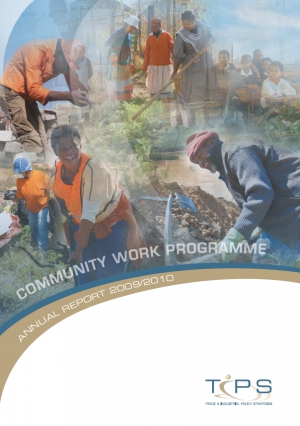
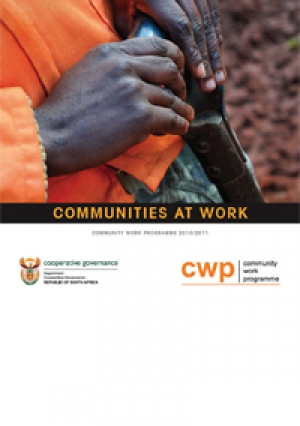
The Community Work Programme (CWP) has been based in the Department of Cooperative Governance (DCoG) since April 2010. In the 12 months to March 2011, 89 689 people participated in the programme putting in 5 449 376 workdays. A total of R307 million was paid in wages, and the CWP had a massive impact on communities in 56 sites all over South Africa.

As well as these nationally-funded sites, six sites were funded by the Gauteng Provincial Government, with a further 7 164 participants. The Employment Creation Fund of the Department of Trade and Industry (the dti) also funded the CWP Watershed Services River Cleaning Project, employing an additional 2 326 people. This brings total participation in the CWP to more than 99 000.

The CWP was started as a pilot project in late 2007. It was initiated as part of a strategy process commissioned by the South African Presidency and located in Trade and Industrial Strategy Projects (TIPS). This strategy process culminated with a framework document, Second Economy Strategy: Addressing Inequality and Economic Marginalisation, approved by Cabinet in January 2009. It was also included in full in the final report of AsgiSA (Accelerated and Shared Growth Initiative for South Africa) in April 2009.

This strategy framework emphasises the need for structural change to deliver sustainable jobs in the South African economy – but it also recognises that this will take time, and that a complementary strategy is needed to enable economic participation by those excluded from employment. In this context, the strategy framework calls for the adaptation of the concept of a minimum employment guarantee to South African conditions –with the CWP as an example of how this could be done.

The CWP pilot programme was supported by The Presidency and the Department of Social Development, which constituted a National Steering Committee to provide strategic oversight to the programme. The National Steering Committee was expanded in 2009 to include representatives from the Department of Public Works, DCoG and National Treasury. The pilot phase and further roll-out of the programme was project managed by TIPS in partnership with two Implementing Agents, Seriti Institute and Teba Development.

Much of the focus of 2010/2011 has been on institutionalising the different elements of the programme in DCoG.

Page 11 of 13