

Janet Wilhelm
Mining and Energy
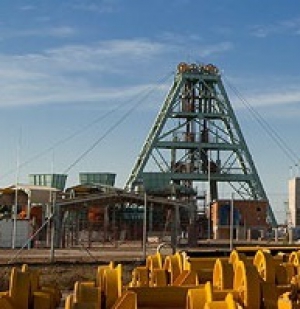
Project name: The impact of electricty price increases on the competitiveness of selected mining sector and smelting value chains in South Africa
Client: Economic Development Department (EDD) and Department of Trade and Industry (the dti)
Funder: Global Green Growth Institute (GGGI)
Duration: 2013-2014
Summary
This research project was jointly commissioned by the EDD and the dti. The GGGI was tasked with implementing the project as part of a partnership to support the South African government’s green growth planning efforts. TIPS was the primary research partner and service provider. This project is the result of the collaboration of all of these institutions. The South African government’s Inter-departmental Green Growth Committee, chaired by EDD, served as the project steering committee for this research. A multi-stakeholder Technical Reference Group was also established to offer inputs on various drafts of the report.
Although not directly associated with the transition to a green growth path, recent trends in South Africa’s electricity supply industry, which has been characterised by energy supply problems since a load shedding crisis in 2008 and drastic price increases (i.e. a trebling of the average electricity price from 2009/2010 to 2017/2018), provide an opportunity to investigate the shift to a greener path. Using these developments as an entry point, this paper investigates the impact of electricity price increases on the competitiveness of mining-related companies and the mitigation measures implemented by various firms in the four most important mining value chains in South Africa, namely platinum, gold, iron ore and coal. Particular attention was paid to the role that electricity price increases and energy security concerns have played in fostering investments by mining-related firms in renewable energy and energy efficiency. It represents a condensed version of an earlier report, which was the result of extensive fieldwork and interviews with stakeholders across the selected mining value chains.
For any enquiries related to the report that are relevant to the dti and EDD, please contact Christian Prins, Economist (macro economic policy), EDD, at cprins@economic.gov.za.
Energy Planning

Project name: Evaluation of South Africa's Integrated Resource Plan
Client: National Economic Development and Labour Council (Nedlac)
Funder: Nedlac Trade and Industry Chamber
Duration: 2014
Summary
Energy, and electricity issues in particular, have been high on the South African agenda since the 2008 crisis, which saw the country’s national power utility Eskom implement rolling load shedding and cut supplies to a number of large customers, such as mines and minerals beneficiation plants. As South Africa experienced in 2014 the most stringent power cuts since 2008, reviewing the current electricity planning process is both a timely and necessary exercise. This review, based on an internationally-recognised framework, unpacks the key pillars of the Integrated Resource Plan (IRP) and reviews South Africa’s performance, with the objective of shedding light on the role and the implications of planning on the country’s electricity supply and pricing. It is the first attempt at applying this international framework to the South African context.
The 10 elements covered are: 1) planning process; 2) plan objectives; 3) review of previous plans; 4) demand forecast methodology; 5) resource options assessment; 6) policy instruments to achieve objectives; 7) regulatory and institutional frameworks; 8) investment financing; 9) social and environmental considerations; and 10) promotion of innovation and anticipation of emerging challenges.
This presentation will explore the role of Bilateral Investment Treaties (BITs) in Investment Promotion for South Africa and rest of the world. Recent global trends have indicated a decline in the ratification of new BITs with a number of countries (including South Africa) reviewing and cancelling treaties that have been in place for decades. The most recent termination of a treaty was between South Africa and Germany, which came into effect on 22 October 2014. The presentation will also seek to identify the reasons for these cancellations and consider new developments in investment policy formulation.
The latest quarterly manufacturing bulletin
The quarterly manufacturing bulletin is an initiative of the Manufacturing Circle. It serves to provide an analysis of trends in the South African manufacturing sector. The focus of this development dialogue will be to present the third quarter manufacturing bulletin with the aim to inform policy and facilitate discussion around strategies to support the manufacturing sector in ways that support mployment and equitable economic growth.
Linking back of port operations to city development plans and supporting the growth of the marine engineering sector
ABOUT THE SPEAKER
Jamie Simpson is an economic and management consultant with 25 years experience related to port planning, infrastructure investment and city-region economic development. He has extensive experience as a Project Director/Manager leading major projects and working with governments and senior executives on strategic planning, investment plans and economic transformation – in Europe, Asia, Africa and North America. He has provided advisory support on a range of port market studies and due diligence for the leading port operators (HPH, DPW, PSA, APMT, ICTSI, China Merchants) and financial institutions (HSBC, BoC, B&B Infrastructure, JPMorgan, Standard and Chartered) as part of their transaction advice.
Jamie was retained by Hong Kong Government and worked with the Port Development Board (Port Development Council), the public-private partnership that includes the world's leading port operators, logistics and shipping lines, for over 10 years in a lead advisor role on port strategy and investment. He has acted as Lead Advisor to governments/ Regional Development Agencies on linking city-region development strategies to port/logistics development – including Felixstowe, Southampton, Teleport and London Gateway in the UK. He has worked with the World Bank, IFC, Asian Development Bank, UK DFID and the Private Infrastructure Development Group (PIDG). Jamie is the Chairperson of the Expert Evaluation Panel of the Cities Alliance Catalytic Fund – a small grant window aimed at funding innovative ideas and approaches related to urbanisation.
Presentation:
Article Front page of The Mercury and Business Report (20 February, 2015):
See research paper for related research on increasing port efficinccy and the important role that ports play in economic development. This falls under the TIPS Small Grant Research Papers initiative and is based on Jack Dryer's work for his masters thesis.
Is Durban's Port Expansion necessary?
Trade & Industrial Policy Strategies (TIPS) in partnership with the University of the Witwatersrand, United Nations University World Institute for Development Economics Research (UNU-WIDER) and the USAID Southern Africa Trade Hub Program, and in association with the Department of Trade and Industry, National Treasury and the Department of Performance Monitoring and Evaluation will be hosting its annual Forum with the theme of Regional Industrialisation and Regional Integration
Johannesburg, South Africa 14-15 July 2015
The conference aims to deepen understanding of regional industrialisation, the role of South Africa in that context, the value chains operating across the region, and the links between regional industrialisation and regional integration.
Context for the conference
The new millennium saw a significant turnaround in Africa's growth prospects. During the period 2000 to 2010, Africa's economic output tripled, increasing from US$587 billion to US$1.7 trillion. Poverty rates have dropped over the last 20 years from 60 percent to 38 percent. Going forward, seven of the ten projected fastest growing economies in the world over the next five years are located in Africa. Sub-Sahara Africa is expected to grow at an average of 5.4 percent per annum over the next five years. Yet commodities and the commodity boom are still key to growth in Africa. While there has been a significant increase in the manufacturing sector, in almost all African economies it still remains relatively small.
The linkage between industrial productive capacity, economic growth and level of development is an important consideration especially for the SADC, as the region has low levels of industrialisation and ranks among the poorest in the world. Collectively, SADC is one of the least developed regions of the world in terms of industrialisation. In only one of the 15 Member States has the ratio of manufacturing value added to GDP risen above 20 percent. In more than half of member countries, the manufacturing sector's contribution to GDP is less than 10 percent and in some cases lower than 5 percent. Furthermore, South Africa's GDP per capita is five to seven times that of the rest of SADC, which is unusually large for a regional centre.
Understanding industrial development in the Southern African region therefore requires an approach that looks at the role of the lead economy and the opportunities for the smaller economies to increase their productive capacity and exports to South Africa. To further the regional development agenda it is important to understand the development of key industrial sectors and how regional value chains work in those sectors.
Regional industrial development is tied into regional integration, which also covers market integration and infrastructure development. Regional integration can been seen as a useful tool towards stimulating economic development, supporting integration into the broader world economy as well as encouraging trade and securing economies of scale among the participating countries. In spite of the tariff liberalisation in Africa and all the advances in forming regional trade areas, however, there seems to be very little growth in intra-African trade, particularly in the Southern African region.
See Annual Forum papers
GREEN ECONOMY - PRINCIPLES AND PRACTICES: WORKSHOP MARCH 2015
TIPS is pleased to announce a workshop on
Green Economy: Principles and Practices
Pretoria 4 – 5 March 2015
Have you ever wondered:
What is a green economy?
Why is a green economy necessary?
What are the intellectual origins of the concept of green economy?
How is green economy related to sustainable development?
How does green economy differ from traditional production and consumption patterns?
What opportunities and risks are presented by green economy prescriptions?
How can my institution benefit from the opportunities presented by the green transition?
How can South African development be bolstered by green economy principles?
This two-day interactive training on the green economy covers both the theoretical concepts and principles related to the green economy, and unpacks the practical experiences and lessons about transitioning to a green economy, with a particular focus on South Africa and other developing countries.
Participants will learn about different concepts and facets of the green economy, as well as global, national and sector-specific challenges. The course considers the opportunities to advance to low-carbon, resource efficient and socially inclusive development. Additionally, participants will develop the skills for applying the green economy concept in a real world economic, policy and/or personal context.
Methodology
The training approach is adapted to professionals in full-time work. Participants are provided with the opportunity to learn through various experiences: absorb (read); do (activity); interact (socialise); and reflect (relate to one's own reality). Over the two intensive days of the course, participants will engage with a range of learning activities and experiences.
Participants will enjoy stimulating and innovative lectures, multimedia learning tools, lively and interactive discussions and experience sharing sessions, concrete examples and case studies from industry experts and guest speakers and practical self-assessment exercises.
Based on TIPS's extensive knowledge and experience on the green economy in South Africa, international research and best practice, and guest speakers, the course brings a rich and diverse offering covering both theoretical and analytical frameworks as well as case study and industry knowledge to complement a holistic view on the green economy. This unique offering brings together a wealth of knowledge on green economy principles and practices, and makes this accessible to participants in a relevant and meaningful way.
After completing the training, participants will be able to:
- Define the concepts around a green economy, such as sustainable development, decoupling, inclusive green growth, green jobs, etc. and explain their value
- Identify enabling conditions for the transition to a green economy at different levels (national, regional, local and entity)
- Identify principal challenges and opportunities for greening key economic sectors
- Describe and understand the planning processes in support of a green transformation
- Recognise international and regional initiatives and support services to foster green development
- Apply the green economy concept to a real world economic, policy and/or personal context
- Understand the tools, mechanisms and indicators to monitor and evaluate the transition to a green economy
Who should attend the course?
The course targets groups and individuals that are interested in obtaining an analytical and practical understanding about the green economy concept and latest developments. At both management and implementation levels, this course is relevant to individuals who would like to better understand the green economy and acquire a working knowledge of the key concepts in the green economy.
They include:
- Civil servants in national Ministries, provincial departments, local authorities and state-owned entities
- Diplomats from Permanent Missions and Ministries of Foreign Affairs
- Environmental managers, public affairs officers in private sector and civil society organisations
- Consultants, academics, researchers and students
Registration
The training takes places over two days at the TIPS offices in Pretoria. Cost includes training material, a certificate of attendance, snack and lunch over the two days. Safe and secure parking is available to participants.
Full cost of the course is R6 000 per participant, payable before 13 February 2015.
To secure your place, contact Natasha at natasha@tips.org.za or 012 443 9340.
Early Bird Bookings: Book and pay before 30 January 2015, and receive a 10% discount
INTRODUCTION TO COMPUTABLE GENERAL EQUILIBRIUM (CGE) MODELLING: WORKSHOP APRIL 2015
TIPS is pleased to announce a workshop on
Computable General Equilibrium (CGE) Modelling
Pretoria from 13 – 17 April 2015
CGE modelling is one of a number of approaches to economy-wide analysis that have become accessible and practicable as data and computer based techniques have developed. An increasing number of economists use this framework to analyse real world issues that were previously approached through less comprehensive partial equilibrium methods. As part of their commitment to ensuring that Southern Africa benefits from these development, TIPS has (co)presented a series of related short workshops over the past fifteen years. The current workshop is part of this on-going programme.
The workshop is designed specifically for people who need to use the results of economy-wide models to inform their analysis of real world issues. It will integrate theory, real world data, hands-on computer work and real-world applications. In particular, participants will be
- introduced to the micro, macro and trade theories that underlie typical CGE models;
- provided with an overview and practical examples of Social Accounting Matrices (SAMs) and of parameter and elasticity estimation methods which typically provide the data on which CGEs are built;
- taken through various applications with special emphasis on the economic interpretation of results;
- exposed to issues involved in using models for specific applications such as the analysis of trade, public finance, regulation and environmental economics.
The models have been set-up to run through an Excel interface, with the specialised modelling language (GAMS) running in the background. This is designed to keep the focus on the economics rather than the technicalities of modelling. The applications use models developed by the International Food Policy Research Institute (IFPRI) and are adapted by the workshop instructors to suit the Excel interface for a range of southern African economies. Participants will apply what they learn to a group mini-project which will be presented at the end of the workshop.
The workshop is targeted at those who need to understand the potential and limitations of the use of these approaches without themselves becoming modellers. As such it should appeal to policy makers and analysts in both the public and the private sectors, to students and to academics. The workshop will also provide a foundation for those who wish to become modellers by taking future workshops on actual modelling techniques.
No previous exposure to CGE modelling is required, although it will be an advantage if participants be familiar with SAMs and have a very good understanding of Excel.
Workshop leaders are Dirk Ernst van Seventer and Rob Davies.
Workshop fees (which includes teas, coffees and lunches): R12,500 for SA resident participants, R12,500 for African participants and those from other developing countries, and R17,500 for other participants.
Note that TIPS will not make refunds after the payment due date unless the workshop is cancelled. TIPS's invoice documentation (tax clearance, bank clearance, etc) will only be sent on request by registered post. It is therefore important to make sure that TIPS is on your organisation's list of preferred suppliers and to factor-in sufficient time for these processes.
Registration closing date is Friday 13 February 2015. Seats will be reserved until the payment closing date of 13 March 2015.The offering of the workshop is dependent on attracting a minimum number of 15 students by the time of the payment closing date while the maximum number of students is 20. Note that TIPS will not make refunds after the payment due date unless the workshop is cancelled. TIPS' invoice documentation (tax clearance, bank clearance, etc) will only be sent on request by registered post. It is therefore important to make sure that TIPS is on your organisation's list of preferred suppliers and to factor-in sufficient time for these processes.
If you are interested in attending this workshop please complete the attached application form and send to:
Dirk Ernst van Seventer: denves@xtra.co.nz
or
Rob Davies: robdavieszim@gmail.com
Sandy Lowitt

Sandy Lowitt holds a Master of Commerce (Economics) from the University of the Witwatersrand. She worked as an economist for the government between 1995 and 2006. In addition to economic policy, strategy and advisory work she also ran the strategic and day to day operations of the Blue IQ infrastructure programme which delivered projects such as the Gautrain, Innovation Hub and Automotive Supplier Park. As a researcher at TIPS she has focused on industrial policy and strategy completing projects for the Presidency, the DTIC and National Treasury. Currently Sandy leads a team focused on Just Transition Finance. Their work includes: understanding what qualifies as a just transition investment, how to improve the just transition project pipeline and what innovative financial ecosystem instruments and mechanisms could support an accelerated just transition.
Gillian Chigumira

Gillian Chigumira joined TIPS in 2014. She has a Masters in Commerce – Development Theory and Policy. She has an Honours in Commerce, an Honours in International Relations and a Bachelor of Arts in International Relations and Anthropology from the University of the Witwatersrand. Gillian has more than eight-and-a half years of experience as an economist, policy advisor and strategy analyst in the field of industrial development and inclusive economic growth for South Africa and the greater SADC Region. Her work fundamentally targets research and policy development for government departments, regional and international organisations. Her expertise cuts across national masterplans for industry, sectors, and individual product analysis in agricultural and agro-processing related value chains and the broader manufacturing sector. Gillian has recently worked on South Africa's Masterplans such as the Water and Sanitation Industrialisation Masterplan; Sugar Value Chain Masterplan; the Poultry and the Plastics Industry Masterplan for Growth Global Outlook. She has also worked on multiple agricultural value chain studies on agro-processing machinery, dairy, aquaculture, abalone, essential oils, soybeans, fruits and vegetables, cassava, industrial starches, hemp, and confectionery.
Before TIPS, Gillian worked at the South African Institute of International Affairs (SAIIA) and Rethink Africa. She is also a Konrad Adenauer Stiftung Scholar | Mellon Mays Fellow | Canon Collins Scholar and attended summer school at Emory University, Bowdoin College, and Bryn Mawr in the United States.
Gillian is also a member and Certified Business Advisor with the Institute of Business Advisors of Southern Africa (Reg. M5358).