tipslogo2c

Janet Wilhelm

ABOUT THE SPEAKER

José Gabriel Palma is currently a Senior Lecturer in the Faculty of Economics, Cambridge University. He has a D. Phil in Economics from Oxford University, a PHD from Cambridge University (by incorporation) and a D. Phil in Political Science from Sussex University.  He worked during the Government of Salvador Allende in the nationalisation of the copper industry, and after his graduate work in the UK he worked as a lecturer at the universities of London, Sussex, Oxford and Cambridge. He has published articles and books dealing with the economics of developing countries, with a strong focus on Latin America and Asia. He has also written extensively on inequality, financial liberalisation and financial crises, industrial policy, the history of ideas in development economics and politics, and Latin American economic history.

Document can be found at: http://www.econ.cam.ac.uk/dae/repec/cam/pdf/cwpe1111.pdf

20 August 2013

Research Networks

Green Economy Coalition

TIPS joined the Green Economy Coalition (GEC) in 2013.

The GEC is a diverse set of organisations and sectors including non-governmental organisations, research institutes, UN organisations, business and trade unions. Its vision is of a resilient economy that provides a better quality of life for all within the ecological limits of the planet. Its mission is to accelerate the transition to a new green economy.

The GEC is governed by a Steering Group which meets every month to discuss strategy and management, and is coordinated by a small secretariat based at the offices of the International Institute for Environment and Development.

www.greeneconomycoalition.org

Research Collaborative: Tracking Private Climate Finance

Tracking private climate finance flows, together with flows of public finance, is a key task in monitoring progress in the international effort to address climate change mitigation and adaptation. Yet, there are significant data, methodological and knowledge gaps on private climate finance flows, and available information is scattered across numerous different actors. Further research and better co-ordination of ongoing initiatives are therefore required to improve the identification, measurement, and reporting of private climate flows.

The Research Collaborative is an open network, co-ordinated and hosted by the OECD Secretariat, of interested governments, relevant research institutions and international finance institutions.

The goal is to partner and share best available data, expertise and information to advance policy-relevant research in a comprehensive and timely manner. The project is designed to serve as a co-ordinating platform for identifying research priorities and gaps, sharing information, weaving a coherent narrative across what would otherwise be disparate research outputs, as well as communicating results to raise awareness in this area.

TIPS is one of the participating institutions.

The others are: Bloomberg New Energy Finance, Climate Policy Initiative, Gaia, Overseas Development Institute, OECD, United Nations Environment Programme, World Resources Institute and Zambia Institute of Environmental Management.

Project website: www.oecd.org/env/researchcollaborative

Summary leaflet of the programme available here: Research Collaborative on Tracking Private Climate Finance


Susan Newman currently holds the position of lecturer in international economics at the International Institute of Social Studies, Erasmus University of Rotterdam. Her main research interests include the political economy of post-apartheid industrial development in South Africa, the relationship between financial and physical markets for commodities, and the relationship between finance and the restructuring of production. She holds a visiting position at the University of the Witwatersrand and has contributed to industrial policy research for the South African Department of Trade and Industry and the Gauteng Department of Economic Development.

Samantha Ashman is currently a Post- Doctoral Research Fellow at the University of Johannesburg. She is also a Visiting Senior Research Fellow at the University of the Witwatersrand. Her research interests include the financialization of the global economy and its implications; the relationship between real and financial accumulation; the evolution of South Africa's Minerals Energy Complex; and Industrial Policy.

Sheila Farrell is an experienced international ports consultant who has undertaken around 120 port consulting assignments in more than 50 countries, most of them concerned with port economics and finance, tariff setting, port reform and privatisation, and regulation.  Several of the projects have been linked to the development of port-related industries. She has over 40 years of experience of port and shipping consultancy. As well as working as a port consultant, she is also a Visiting Professor in Port Operations Research at Imperial College London. She is a member of an EU-funded multi-national group of academics undertaking a four year research programme into improving the effectiveness of Public Private Partnerships (PPPs) in transport, and has written two books on the subject of financing transport infrastructure.  She also writes and teaches on economic and financial issues relating to ports.

Abstract

CDI's Context of Public Primary Education Research Project is an extension of this South African Community Capability Study, in that it further zooms into the education dimension within communities by investigating its relationship to formal schooling in its location. Part of this project attention is paid to the Community Work Programme (CWP) that is implementing its meaningful work for basic income intervention in certain schools, including in four of the communities in the study. This report presents the findings of the perceptions and experiences of public primary schools that are beneficiaries of the CWP as well as the experiences of CWP participants' in working in public primary schools.

About the speaker

Melani Prinsloo is a founding member of the Centre for Democratising Information (CDI), where she undertakes the strategic leadership of the organisation as a whole. CDI has positioned itself as a significant and unique research entity – operating a community-based research platform focussing on under-developed communities. CDI and Infusion's clients include Department of Basic Education, Department of Science and Technology, Department of Health, Business Trust, SoulCity, Finmark Trust, Standard Bank, FNB, African Life, Sanlam, Metropolitan, Shoprite, Vodacom, Microsoft, MultiChoice, Financial Services Board and more. CDI aims to address the shortage of reliable, detailed information on under-developed by training unemployed people from communities to act as information agents, gathering data for surveys designed to investigate the context in which people live and make their decisions. A significant part of Melani's role is to identify and manage a network of people who engage on these research projects to ensure that each project is supported by a suitable, relevant and well-aligned team.

Sunday Times - 14 April 2013

Read more...

Introduction to Economy-wide Modelling for Policy Analysis: 11-15 November, 2013

TIPS is pleased to announce a workshop on computable general equilibrium (CGE) modelling, to be held in Pretoria.

CGE modelling is one of a number of approaches to economy-wide analysis that have become accessible and practicable as data and computer based techniques have developed. An increasing number of economists use this framework to analyse real world issues that were previously approached through less comprehensive partial equilibrium methods. As part of its commitment to ensuring that Southern Africa benefits from these development, TIPS has (co)presented a series of related short workshops over the past 13 years. The current workshop is part of this on-going programme.

The workshop is designed specifically for people who need to use the results of economy-wide models to inform their analysis of real world issues. It will integrate theory, real world data, hands-on computer work and real-world applications.

In particular, participants will be

  • Introduced to the micro, macro and trade theories that underlie typical CGE models,
  • Provided with an overview and practical examples of Social Accounting Matrices (SAMs) and of parameter and elasticity estimation methods which typically provide the data on which CGEs are built,
  • Taken through various applications with special emphasis on the economic interpretation of results, and
  • Exposed to issues involved in using models for specific applications such as the analysis of trade, public finance, regulation and environmental economics.

The models have been set-up to run through an Excel interface, with the specialised modelling language (GAMS) running in the background. This is designed to keep the focus on the economics rather than the technicalities of modelling. The applications use models developed by the International Food Policy Research Institute (IFPRI) and are adapted by the workshop instructors to suit the Excel interface for a range of southern African economies. Participants will apply what they learn to a group mini-project which will be presented at the end of the workshop.

The workshop is targeted at those who need to understand the potential and limitations of the use of these approaches without themselves becoming modellers. As such it should appeal to policy makers and analysts in both the public and the private sectors, to students and to academics. The workshop will also provide a foundation for those who wish to become modellers by taking future workshops on actual modelling techniques.

No previous exposure to CGE modelling is required, although it will be an advantage if participants be familiar with SAMs and have a very good understanding of Excel.

Workshop leaders are Dirk Ernst van Seventer and Rob Davies

Workshop fees (which include teas, coffees and lunches): R10 000 for South African resident participants, R10 000 for African participants and those from other developing countries and R15 000 for other participants.

Registration closing date is Friday 30 August 2013. Seats will be reserved until the payment closing date of 4 October 2013.The offering of the workshop is dependent on attracting a minimum number of 15 students by the time of the payment closing date while the maximum number of students is 20. Note that TIPS will not make refunds after the payment due date unless the workshop is cancelled. TIPS's invoice documentation (tax clearance, bank clearance, etc) will only be sent on request by registered post. It is therefore important to make sure that TIPS is on your organisation's list of preferred suppliers and to factor-in sufficient time for these processes.

If you are interested in attending this workshop please complete the application form below and send to:

Dirk Ernst van Seventer (denves@xtra.co.nz) or Rob Davies (robdavieszim@gmail.com)



Official project name: Scoping a Green and Inclusive Growth Economy Observatory for Africa (GIGEO-Africa)

Client: TIPS

Funder: International Development Research Centre (IDRC)

Duration: February-April 2013

Summary

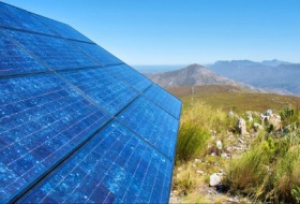
The Sustainable Growth pillar is driving an Africa-wide initiative to investigate the state of the green economy on the continent. TIPS organised in March 2013 a week-long workshop in Dar es Salaam, Tanzania on scoping a Green Economy Observatory for Africa (GEO-Africa).

The workshop, organised with the support of Canada’s IDRC, gathered relevant research institutions and policymakers from Cote d’Ivoire, Ghana, Kenya, Nigeria, Senegal, South Africa and Tanzania to discuss green economy issues in an African context. Based on background documents and an original proposal developed by TIPS in co-operation with the Human Sciences Research Council (HSRC) in South Africa, discussions were aimed at engaging on the local, regional and continental specificities of the green economy in Africa and the development of a programmatic proposal to assess the state of the green economy on the continent.

Photo: Shutterstock

Official project name: Commercial Climate Change Risks and Opportunities in South Africa

Client: Camco

Funder: British High Commission

Duration: May 2009 – November 2010

Summary

TIPS participated in a research project led by Camco, an international consulting firm specialising in climate change solutions, and financed by the British High Commission. This considered the indirect effects that climate change could have on South Africa's economy, ranging from impacts on the tourism sector, aviation and food exports, to commercial opportunities in low carbon technologies and the promotion of alternative carbon markets.

In addition to the main report, a series of 18 sectoral reviews and two case studies on the construction industry, and renewable energy and the draft Integrated Resource Plan for electricity, were produced.

A multi-stakeholder workshop was held in August 2009 to present the study and debate the effect that the climate challenge could have on the South African economy.

In May 2010, a Low Carbon Growth Seminar was hosted to disseminate the findings of the report to all relevant stakeholders.

Main Report

Climate Change: Risks and Opportunities for the South African Economy – An Assessment of Mitigation Response Measures

Main report

Case Studies

The Construction Industry’s Path towards a Low Carbon Trajectory

Renewable Energy and the Draft IRP 2010: The Winds of Change

Presentations

Stakeholder workshop - 14 August 2009

Towards Low Carbon Growth in South Africa - 6 May 2010

Official project name: Trade and climate change: Policy and economic implications for South Africa

Client: Energy Research Centre at the University of Cape Town

Funder: Energy Research Centre at the University of Cape Town

Duration: 2010-2011

Summary

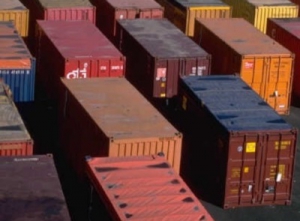
Climate and trade issues lie at the intersection of two of the world’s most contested, delayed and important multilateral negotiations: climate change, under the auspices of the United Nations Framework Convention on Climate Change (UNFCCC), and international trade, as regulated by the World Trade Organization (WTO).

In August 2010, TIPS was commissioned by the Energy Research Centre at the University of Cape Town, under their Mitigation Action Plans and Scenarios (MAPS) project, to complete a scoping assessment of the inter-relationship between international trade and climate change negotiations as it affects policy-development in South Africa.

The paper highlights two key variants of measures which pose a challenge to both these negotiations, specifically border carbon adjustments and the liberalisation of trade in environmental goods and services.

The findings of the study were presented by TIPS to the BASIC (Brazil, South Africa, India and China) Group meeting under the auspices of the UNFCCC in Tianjin, China in October 2010.

Page 131 of 158