

Janet Wilhelm
Technical Assistance to the South African UNFCCC Delegation on Climate Finance and Market-Based Mechanisms
Official project name: Technical support on economic modelling of impacts of international policies and mechanisms on markets, sectors, climate finance and technology on South Africa / GIZ Project: DEA Climate Change Support Program
Client: Department of Environmental Affairs (DEA), Chief Directorate - International Climate Change Relations and Negotiations
Funder: Gesellschaft für Internationale Zusammenarbeit (GIZ)
Duration: 15 April 2012 - 31 March 2013
Summary
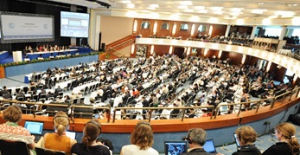
TIPS was contracted in 2012/2013 by GIZ to provide technical assistance to the DEA on three topics in the United Nations Framework Convention on Climate Change (UNFCCC) negotiations:
- The use of (carbon) markets to improve the allocative efficiency of mitigation efforts;
- The use of (carbon) finance to reduce the cost of developing country mitigation and adaptation actions; and
- The use of sectoral mechanisms (to extend the coverage of mitigation commitments and to raise finance for adaptation and mitigation).
As part of this project, TIPS produced a comprehensive report for the South African delegation to the UNFCCC on Markets, Sectoral Approaches and Finance, including specific recommendations on negotiation positions.
TIPS also developed a spreadsheet-based Integrated Assessment Model, dubbed Basic Assessment Tool of the Impact of Climate Action (BATICA), which aims to demonstrate the impacts of markets, non-market mechanisms (such as carbon price floors and ceilings), financial support and innovation on the cost of global climate action and the distribution of this cost among countries or sectors).
In addition to the continual engagement with DEA officials, TIPS ran workshops to present the findings of the report and the model to the delegation members and government officials.
TIPS also provided on-going and on-site support to the South African delegation at the Bonn Climate Change Conference (AWG-KP 17, AWG-LCA 15 and ADP 1) in Bonn, Germany (14-25 May 2012), the Bangkok Climate Change Conference (informal additional sessions of the AWG-LCA, AWG-KP and ADP) in Bangkok, Thailand (30 August - 5 September 2012) and the Doha Climate Change Conference (COP 18 – CMP 8) in Doha, Qatar (26 November – 7 December 2012).
TIPS also provided support to DEA during two BASIC Experts Forums – one in Johannesburg, South Africa in July 2012 and one in Beijing, China just prior to 18th Conference of the Parties (COP18).
Official project name: Green Jobs in South Africa / Part of the Social Dialogue for Green and Decent Jobs. South Africa - European Dialogue on Just Transition project
Client: Sustainlabour Foundation
Funder: European Union
Duration: 7 March 2012 – 20 April 2012
Summary
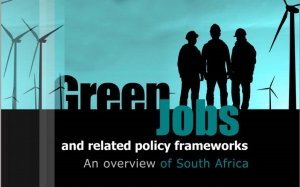
TIPS was commissioned in 2012 by the Sustainlabour Foundation to produce a comprehensive report on green jobs and related policy frameworks in South Africa. The research forms part of the Social Dialogue for Green and Decent Jobs: South Africa - European Dialogue on Just Transition project, co-funded by EuropeAid and Sustainlabour, in which the Congress of South African Trade Unions (COSATU) acts as a partner organisation.
The research was published by Sustainlabour in February 2013 in a report titled Green Jobs and related policy frameworks: An overview of South Africa. TIPS presented the report findings at a Training Workshop for South African Trade Unions on Green and Decent Jobs in Johannesburg, South Africa in November 2012.
Official project name: Financing Needs and Preconditions for the South African Renewables Initiative (SARi)
Client: KfW Entwicklungsbank
Funder: KfW Entwicklungsbank
Duration: 30 August 2010 - 1 December 2010
Summary
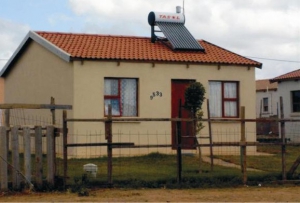
In 2010, the KfW Entwicklungsbank commissioned a study to determine the feasibility of, and preconditions for, the South African Renewables Initiative (SARi) during the stage of its conceptualisation. Special attention was paid to the role that the German government could play as an international funder of SARi and the implications of this support for the German government, German businesses, and international climate change negotiations.
The project highlighted the scope, development and implementation efforts of SARi, with a particular focus on the possible avenues through which a collaborative role could be played by donor institutions and countries in the implementation of SARi. TIPS conducted the study in collaboration with the Ecologic Institute, a private not-for-profit thinktank for applied environmental research, policy analysis and consultancy, and IMBEWU Sustainability Legal Specialists (Pty) Ltd, to provide German and South African perspectives and knowledge.
Photo: Nelson Mandela Bay Municipality
Green Industries Strategy
Official project name: Green Industries Strategy
Client: Department of Trade and Industry
Funder: Department of Trade and Industry
Duration: 2011
Summary
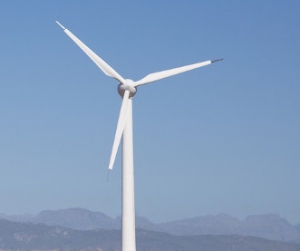
TIPS has carried out pioneering work in the field of green industries. TIPS provided technical support to the Department of Trade and Industry (the dti) through the part-time secondment of its Programme Manager for Sustainable Growth. TIPS assisted the department in establishing a Sector Strategy for Green Industries as well as a Sub-Sector Strategy for Solar and Wind Power. This work directly led to the establishment of the Green Industries desk at the dti.
TIPS also provided assistance to the dti (as part of the secondment) in finalising the Independent Power Producer Procurement Programme for renewable energy, which is expected to lead to the installation of 3 725 MW of renewable energy in the country.
Green Jobs: An Estimate of Direct Employment Potential of a Greening South African Economy
Official project name: Green Jobs - An estimate of direct employment potential of a greening South African economy
Client: Industrial Development Corporation, Development Bank of Southern Africa and TIPS
Funder: Industrial Development Corporation, Development Bank of Southern Africa and TIPS
Duration: 2011
Summary
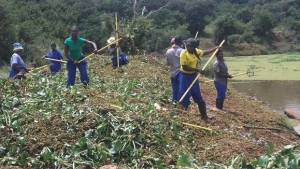
TIPS, the Industrial Development Corporation (IDC) and the Development Bank of Southern Africa (DBSA) contributed to a groundbreaking report that estimated the direct job opportunities from a greening economy in South Africa.
The joint report, launched in December 2011, estimated the employment potential in the formal sector of the green economy in South Africa to be about 98 000 new direct jobs in the short term (2011-2012), almost 255 000 in the medium term (2013-2017) and around 462 0000 employment opportunities or part-time jobs in the long term (2018-2025).
Manufacturing and construction jobs each comprise about 10% (46 000) of the total number of jobs, with most associated with operation and maintenance (O&M) services. In total, 26 industries were covered including sectors such as energy generation, energy and resource efficiency, emission and pollution mitigation, and natural resource management. In the long term, almost 50% of this job creation potential stems from natural resource management, activities associated with biodiversity conservation and ecosystem restoration, as well as soil and land management. Payment for ecosystem services could also generate substantial employment opportunities.
Energy generation comes second with more than 130 000 employment opportunities (28% of the total), growing rapidly from 13 500 (14%) in the short term. Job creation in energy and resource efficiency is expected to double from 31 500 in the short term to 68 000 in the long term, accounting for under 15% of the total. The potential of emission and pollution mitigation is more limited. The sector should still result in about 32 000 jobs in the long run.
Intellectual Property and Climate Change

Official project name: Sharing technology in a low-carbon knowledge economy
Client: South African Institute of International Affairs
Funder: South African Institute of International Affairs
Duration: 2012-2013
Summary
In 2012, TIPS’s Sustainable Growth pillar worked for the South African Institute of International Affairs (SAIIA) on a research paper on intellectual property in climate negotiations, including a case study focused on concentrated solar power (CSP).
The paper shows that the technological revolution required by climate action can be achieved by existing technology, but would benefit immensely from continued innovation to lower costs. The sheer scale of investment required necessitates the wholesale participation of the private sector, motivated to innovate by intellectual property rights (IPR). The paper shows that IPR is an essential institutional tool for disseminating technology and that its benefits are greater than its costs – costs which can be further contained through competition policy.
Of the issues that plague developing nations' ability to access technology, absorptive capacity and the ability to demonstrate first-of-its-kind technologies at scale – rather than IPR costs – are prominent and can be addressed through finance solutions, possibly under a global climate regime.
The research, which was presented at an International Institute for Sustainable Development (IISD) / International Centre for Trade and Sustainable Development (ICTSD) side-event at COP17 climate negotiations in Durban, South Africa, contributed to informing the official position of the South African government.
Climate Finance Tracking in South Africa

Official project name: Tracking Climate Finance Inflows to South Africa
Client: Organisation for Economic Co-operation and Development (OECD)
Funder: Organisation for Economic Co-operation and Development (OECD)
Duration: 15 January 2013 - 21 March 2013
Summary
TIPS was commissioned in 2013 by the OECD to carry out a case study focused on the state of the tracking of public and private climate-related inflows to South Africa.
The study investigates South Africa’s strategy on climate finance (tracking). It then describes South Africa’s project-based approach for tracking and explores what data on public (domestic and foreign) and private climate finance inflows are available in South Africa and how information is collected. Finally, the paper highlights the challenges of tracking climate finance in South Africa and formulates recommendations.
The research findings were presented at the OECD/IEA Climate Change Expert Group (CCXG) Global Forum in Paris, France in March 2013.
Tracking Private Climate Finance – Research Collaborative
The Research Collaborative is an open network, co-ordinated and hosted by the OECD Secretariat, of interested governments, relevant research institutions and international finance institutions.
The goal is to partner and share best available data, expertise and information to advance policy-relevant research in a comprehensive and timely manner. The project is designed to serve as a co-ordinating platform for identifying research priorities and gaps, sharing information, weaving a coherent narrative across what would otherwise be disparate research outputs, as well as communicating results to raise awareness in this area.
TIPS is one of the participating institutions.
The others are: Bloomberg New Energy Finance, Climate Policy Initiative, Gaia, Overseas Development Institute, OECD, United Nations Environment Programme, World Resources Institute and Zambia Institute of Environmental Management.
Project website: www.oecd.org/env/researchcollaborative
A summary leaflet of the programme available here: Tracking Private Climate Finance – Research Collaborative
South African Economic Regulators Conference
Official project name: Co-ordination and facilitation of the Economic Regulators Conference
Client: National Energy Regulator of South Africa
Funder: National Energy Regulator of South Africa
Duration: August 2011 - August 2012
Summary
TIPS was appointed in 2011/2012 to facilitate and co-ordinate the organisation of the first South African Economic Regulators Conference (SAERC) which took place on 21-22 August 2012 on behalf of the National Energy Regulator of South Africa (NERSA).
In addition to all logistical requirements, TIPS managed the call for papers and was responsible for the selection and quality control of the conference papers. The conference explored the following question: How can South Africa’s economic regulators contribute to cost-effective delivery of essential infrastructure in the face of key financial, social and environmental imperatives?
The conference, which focused on the regulation of economic infrastructure in the context of high administered price inflation, growing private sector participation and increased threat of climate change, was attended by 200 participants from the region over two days with more than 30 research papers being presented.
To access the programme and papers go to www.nersa.org.za/SAERC
Greenindustries.org.za Website
Official project name: greenindustries.org.za - An Online Forum for Green Industry Consumers, Suppliers and Policymakers
Client: Department of Environmental Affairs
Funder: British High Commission – Prosperity Fund
Duration: 1/06/2011 – 31/03/2012
Summary
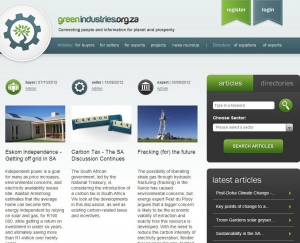
The Sustainable Growth pillar developed a website (http://www.greenindustries.org.za) for the Department of Environmental Affairs to connect green industry actors to each other as well as gathering relevant reference information on the sector.
The website provides a platform for information exchange and debate on green industries in South Africa. The website, which was sponsored by the British High Commission until the end of 2012, also serves as a directory of green projects, and providers of green goods and services in the country.
Business Consultation on Rio+20
Official project name: Facilitation of a Sectoral Workshop and Preparation of a Briefing Paper. Rio+20 Project / Research and Technical Cooperation Services Unit for the Trade Development and Cooperation Agreement Facility
Client: WWF and Department of Environmental Affairs
Funder: Trade Development and Cooperation Agreement (European Union)
Duration: 22 March 2012 – 10 April 2012
Summary
In 2012, the Department of Environmental Affairs (DEA) engaged with civil society stakeholders to inform its response to the Rio+20 Zero Draft Outcome Document, The Future We Want. The DEA supported the organisation of four sectoral workshops with relevant stakeholders from the environmental movement, labour, business and the social sector.
TIPS facilitated the business cluster workshop in Johannesburg, South Africa in April 2012 aimed at informing relevant stakeholders and capturing sectoral views relating to Rio+20. TIPS’s Sustainable Growth pillar developed a briefing paper, titled “How Can a Green Economy Transition Make Doing Business in South Africa Easier and More Competitive?” to inform and guide the DEA and other business stakeholders on issues related to Rio+20, including recommendations to be included in the DEA submission to Cabinet. TIPS was also responsible for rapporteuring and synthesising the outcome of the consultation, which constituted the input of business in the process.