

Janet Wilhelm
African Programme on Rethinking Development Economics (APORDE) 2014: Five public lectures
Shale gas economics for South Africa: How geology, technology, finance and gas markets are inter-linked.
The presentation will explore the viability of shale gas in South Africa from an economic lens. By focusing on issues such as geology, decline rates and breakeven costs of wells and exploring the relationship between gas prices and cash-flows, the presentation will seek to answer the core question of whether a shale revolution would occur in South Africa. In doing so, it will explore questions around the longevity of a shale revolution, the price at which shale gas is commercially viable, and the economic lessons from the US shale revolution. Finally, it will look at the outstanding research questions pertaining to economic and investment issues related to shale gas.
ABOUT THE SPEAKER
Saliem Fakir is the Head of the Living Planet Unit at the World Wildlife Fund South Africa. The Unit's work is focused on identifying ways to manage a transition to a low-carbon economy. Saliem has previously served as senior lecturer at the Department of Public Administration and Planning and Associate Director for the Center for Renewable and Sustainable Energy at the University of Stellenbosch, where he taught a course on renewable energy policy and financing of renewable energy projects.
He has also previously worked for Lereko Energy (Pty) Ltd (2006), an investment company focusing on project development and financial arrangements for renewable energy, biofuels, waste and water sectors. He also served as Director of the World Conservation Union South Africa (IUCN-SA) office for eight years (1998-2005). Prior to the IUCN he was the Manager for the Natural Resources and Management Unit at the Land and Agriculture Policy Center.
Saliem served on a number of Boards. Between, 2002-2005, he served as a chair of the Board of the National Botanical Institute. He also served on the board of the Fair Trade in Tourism Initiative, and was a member of the Technical Advisory Committee of the Global Reporting Initiative, based in Amsterdam. He currently serves on Boards of GreenCape, Fair-Trade Label South Africa, Center for Renewable and Energy Studies, and Center for Environmental Rights.
He is a regular columnist for the South African Center for Civil Society and Engineering News.
Saliem received a Senior Executive Management course at Harvard University in 2000, a Master's in Environmental Science from Wye College, London, and a B.Sc. with honours in molecular biology from WITS.
Alice Amsden Memorial Lecture: How Economies Grow - Alice Amsden and the Real World Economics of Late Industrialisation
Speaker – Professor Stephanie Seguino
How Economies Grow: Alice Amsden and the
Real World Economics of Late Industrialisation
4 September 2014 - 18:30 for 19:00 (light dinner served)
ABOUT THE SPEAKER
Stephanie Seguino is Professor of Economics at the University of Vermont, USA; Professorial Research Associate at the School of Oriental and African Studies (SOAS), University of London; and Research Scholar at the Political Economy Research Institute at the University of Massachusetts/Amherst. Prior to obtaining a Ph.D. from American University, she served as economist in Haiti for several years in the pre- and post-Baby Doc era. Her current research explores the relationship between inequality, growth and development. A major focus of that work explores the effect of gender equality on macroeconomic outcomes. She has also examined the gender and race effects of contractionary monetary policy. She is an instructor in the African Program for Rethinking Development Economics (APORDE), Associate Editor of Feminist Economics and Journal of Human Development and Capabilities, and a member of the editorial board of Review of Keynesian Economics, as well as past president of the International Association for Feminist Economics. More recently, she was guest editor of a special issue of Feminist Economics on the global economic crisis. She has worked with a wide variety of international organisations and trade unions including the UNDP, UNRISD, World Bank, AFL-CIO and ITUC.
Alice H. Amsden, an expert in economic development who served as the Barton L. Weller Professor of Political Economy in MIT's Department of Urban Studies and Planning, died suddenly on March 14 at her home in Cambridge. She was 68. A prolific scholar, Amsden wrote extensively about the process of industrialisation in emerging economies, particularly in Asia. Her work frequently emphasised the importance of the state as a creator of economic growth, and challenged the idea that globalisation had produced generally uniform conditions in which emerging economies could find a one-size-fits-all path to prosperity.
TIPS recently completed a study investigating the impact of the controversial Eskom electricity supply agreement with Aluminium mining conglomerate BHP Billiton using a cost-benefit analysis (CBA) methodology to assess the costs and benefits to society of cancelling the special pricing agreement (SPA) that Eskom has with BHP Billiton. The CBA considered the following scenarios (i) Continuing with the current electricity arrangement (ii) Removing the electricity subsidy permitted to the BHP aluminium smelters and allowing the electricity price they pay to adjust to megaflex rates, and (iii) Comparing scenarios (i) and (ii).
The focus of this Development Dialogue will be to present the quantitative aspects of this research. The Development Dialogue calls for an interesting discussion as this is a hotly debated issue in South Africa at the moment, with the National Energy Regulator of South Africa (NERSA) having received a request from Eskom in 2012 to investigate its contract with BHP.
ABOUT THE SPEAKER
Dinga Fatman has a Masters degree in Economics at the University of KwaZulu-Natal. He joined TIPS in 2011 to provide research assistance in the industrial policy pillar. His Masters dissertation topic was entitled: “Labour Regulations and Firm Performance in South Africa”. Dinga's general research interests involve South Africa's investment climate issues and advanced econometrics.
Protectionism or consumer concern?
TIPS recently completed a study investigating how South Africa can improve the strategic use of its technical infrastructure (which include SABS, NMISA, SANAS, and NRCS) in a way that maximises enforcement by creating linkages with other measures such as import controls, consumer protection and customs and administrative procedures in order to grow the local manufacturing sector and facilitate manufacturing exports.
This Development Dialogue presents an overview detailing the importance of technical regulations in protecting local manufacturers and consumers, but also looking at how globally these regulations can/are being used as a form of protection.
ABOUT THE SPEAKER
Mbofholowo Tsedu is an Assistant Programme Manager for the Industrial Development pillar at TIPS primarily focused on trade and industrial policy issues. Mbofholowo has been engaged in numerous industrial policy-related studies including on designation, local content reporting, sector strategies and localisation. He also has been responsible for providing supplementary research support to TIPS's other pillars. Mbofholowo has an economics degree from the University of Pretoria and is currently completing a MSc programme focused on Industrialisation, Trade and Economic Policy at the University of Strathclyde, Glasgow, Scotland.
TIPS recently completed a study investigating how South Africa can improve the strategic use of its technical infrastructure in a way that maximises enforcement by creating linkages with other measures such as import controls, consumer protection and customs and administrative procedures in order to grow the local manufacturing sector and facilitate manufacturing exports.
The main the main technical institutions of South Africa are SANAS – the South African National Accreditation System; NRCS – the National Regulator of Compulsory Specifications; SABS – the South African Bureau of Standards; and NMISA – the National Metrology Institute of South Africa.
This Development Dialogue presents an overview detailing the importance of technical regulations in protecting local manufacturers and consumers, but also looks at how globally these regulations can/are being used as a form of protection.
Main Speaker: Mbofholowo Tsedu
Mbofholowo is an Assistant Programme Manager for the Industrial Development pillar at TIPS primarily focused on trade and industrial policy issues. Mbofholowo has been engaged in numerous industrial policy-related studies including on designation, local content reporting, sector strategies and localisation. He also has been responsible for providing supplementary research support to TIPS's other pillars. Mbofholowo has an economics degree from the University of Pretoria and is completing a MSc programme focused on Industrialisation, Trade and Economic Policy at the University of Strathclyde, Glasgow, Scotland.
Carbon tax: Friend or foe?
Mining Review Africa - Issue 3 March 2013
Seminar by Milford Bateman: Moving from failed 'anti-developmental' microcredit to a 'developmental' local financial system in South Africa: exploring the key institutions, problems and prospects.
About the speaker
Milford Bateman is a freelance consultant on local economic development policy. Since 2005 he has been Visiting Professor of Economics at Juraj Dobrila University of Pula, Croatia. He has PhD from University of Bradford, UK, and was a UK University-based lecturer in East European economics and a consultant on local economic development policy, before becoming a full-time consultant on local economic development policy working on local economic development policy and programme design and across Eastern Europe, Middle East, China, South Africa and Colombia. Dr Bateman has published widely on issues of local economic and social development through several edited books on entrepreneurship and SME development and a number of peer-reviewed journal articles and book chapters. He is the author of Why Doesn't Microfinance Work? The Destructive Rise of Local Neoliberalism published by Zed Books in 2010.
Why is inequality so unequal across the world?
Why is inequality so unequality across the works? And why is it so difficult to do something about it in middle income countries?- Seminar by Jose Gabriel Palma
Jose Gabriel Palma is a Senior Lecturer in the Faculty of Economics, Cambridge University. He has a D. Phil in Economics from Oxford University, a PHD from Cambridge University (by incorporation) and a D. Phil in Political Science from Sussex University. He worked during the Government of Salvador Allende in the nationalisation of the copper industry, and after his graduate work in the UK he worked as a lecturer at the universities of London, Sussex, Oxford and Cambridge. He has published articles and books dealing with the economics of developing countries, with a strong focus on Latin America and Asia. He has also written extensively on inequality, financial liberalisation and financial crises, industrial policy, the history of ideas in development economics and politics, and Latin American economic history.
Background reading
Economic Regulation
Project name: Regulatory Entities Capacity Building: Review of Regulators Orientation and Performance
Client: Centre for Competition, Regulation and Economic Development, University of Johannesburg
Funder: Economic Development Department
Duration: 2013 - March 2014
Summary
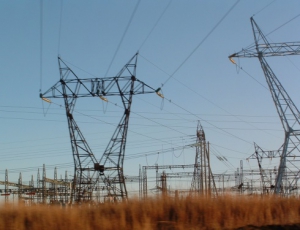
Effective performance by economic regulators is important for growth and development. In recognition of the importance of their role, the Centre for Competition, Regulation and Economic Development, University of Johannesburg has commissioned the Centre for Competition, Regulation and Economic Development to undertake a research and capacity building project for economic regulators in South Africa. The Regulatory Entities Capacity Building Project involves a review of the performance of the economic regulators as well as identifying the constraints impacting their performance. The University of Johannesburg aims to use the information from the reviews to create customised training course in regulatory economics for both employees of the economic regulators in South Africa and for students.
TIPS conducted three sector reviews for the project, including the electricity sector and the renewable enery sector.
The emphasis of these reviews was on understanding the issues at a practical level, looking at how the regulator has been able to address the challenges it has faced, and how it can be assisted to improve, including from learning from other regulators.
Review of Regulation in the Electricity Supply Industry
Review of Regulation in Renewable Energy
PUBLISHED ARTICLE
South Africa’s Renewable Energy Independent Power Producer (REIPP) procurement programme is hailed worldwide as a model for renewable energy procurement. Its success is far from experimental and haphazard and points directly to lessons acquired prior to, and during, the launch and running of the programme. This article explores the journey of the REIPP procurement programme and draws critical lessons from the process. It discusses the success of the REIPP procurement programme in developing the renewable energy sector in South Africa, drawing seven key lessons that explain this success and exploring the remaining challenges. The article shows that, despite the need for further improvements and continual optimisation, the development of the REIPP procurement programme has been a positive illustration of successful policy and regulatory learning processes.
Lessons from South Africa's Renewable Energy Regulatory and Procurement Experience