
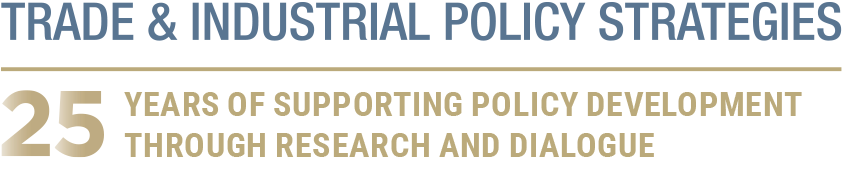

Janet Wilhelm
Alternative Energy Generation , Opportunity, Policy & International Comparison - TIPS & PDG Workshop
Rozale Sewduth

Rozale Sewduth joined TIPS in 2010. Her portfolio at TIPS includes organising events and conferences and she co-ordinates the TIPS training workshop programme. She was involved with providing administrative support to the Community Work Programme (CWP) during the handover period from TIPS to the Department of Cooperative Governance and was part of the team that designed and implemented the TIPS Geographical Information System (GIS) community mapping tool.
Rozale has more than 10 years' working experience. Her core capabilities are project coordination, contract management, customer relations, staff supervision, office management and personal assistant duties. She has extensive experience in managing events and conferences at a national and international level.
She has worked both locally and internationally: United States of America, United Kingdom and South Africa and holds a diploma in Business Management and Administration and completed the Project Administration course through UCT. She has a certificate in Strategic Event Management
Prior to TIPS Rozale was employed at the ComMark Trust as Executive PA and Office Manager.
Ros Thomas
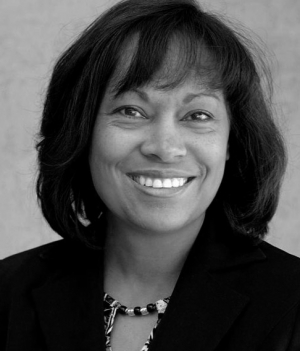
Dr Thomas has a +18-year track record of outstanding performance as a senior executive, advisor on regional infrastructure and PPPs, development finance, private sector development, risk management, governance, trade and investment, and policy and capacity development in Africa with extensive knowledge of key regional economic concerns in Africa. She is currently a partner in a new enterprise, in partnership with a New York based Investment Bank, to form a joint venture - Africa Rising Capital (Pty) Ltd trading as Nova Capital Africa - providing investment banking services in South Africa and the rest of the continent.
As a Director of the NEPAD, Regional Integration (RI) and Trade Department at the African Development Bank (AfDB) in Tunisia from 2007-2008, she introduced innovative thinking into the Bank’s business on RI and regional infrastructure, including the NEPAD strategy on Development Corridors and SDIs, which still forms the basis of that department’s activities to date. She successfully managed the African Aid for Trade Meeting in Dar es Salaam in September 2007. By December 2007 she had mobilized for the NEPAD Infrastructure Project Preparation Fund (IPPF), then a USD10 million facility, an additional +USD50 million from various donors including a net income contribution from the Bank.
As the founding Chief Executive Officer of the SADC Development Finance Resource Centre (DFRC) in Gaborone, Botswana from 2003-2007, she supported efforts towards financial sector integration; built the capacity of DFIs on inter alia, corporate governance, enterprise-wide and credit risk management and financial sector reform. She supported the development of Public Private Partnerships (PPPs) in infrastructure, and strengthening DFI skills on investment appraisal and risk analysis, as well as on SMEs development and financing. From January 2002-July 2003 when seconded to the SADC Secretariat by the National Treasury she helped to manage the development of the SADC Finance and Investment Protocol, and was engaged as a Team member in developing the Regional Indicative Strategic Development Plan, SADC’s 15 year development strategy, authoring Chapter 5 on the sustainable financing of the RISDP.
Dr. Thomas was the first African and second woman to hold a position from 2005-2007 on the world-wide Technical Advisory Panel of the World Bank'sPublic-Private Infrastructure Advisory Facility (PPIAF). The Panel reports to PPIAF's 15 donors on the performance of the PPIAF team in facilitating private participation in infrastructure projects in developing countries.
From 1998-2001, she was Manager of the Risk Management Unit at the Development Bank of Southern Africa (DBSA). During this period the Unit’s risk policies were a significant influential factor enabling the DBSA to obtain two international credit ratings from Moody’s and Standard and Poor’s.
She holds a Ph.D. in International Economic Law from the University of Witwatersrand; an MA in International Economics and Law from SAIS - Johns Hopkins University in Washington, D.C.; has done post-graduate studies at Harvard University, Yale Law School, the University of Cambridge in the UK, and has been awarded six scholarships for educational excellence. Dr. Thomas has authored numerous professional publications; guest lectured at numerous universities and participated in several consulting studies and conferences.
Dr. Matthew Stern & Prof. Roman Grynberg
The SACU Revenue Sharing Formula: Looking Backwards & Thinking Forwards
Chair: Xavier Carim, ITED (the DTI)
Xavier Carim is deputy director-general of International Trade & Economic Development at the Department of Trade and Industry (DTI). He was previously chief director in the ITED division responsible for negotiating bilateral and regional trade agreements as well as negotiating at the World Trade Organisation (WTO).
Professor Roman Grynberg is a trade economist currently Research Fellow at Bostwana Institute of Development Policy Analysis (BIDPA). He is the former head of the Trade and Regional Integration Section and Deputy Director of the Economic Affairs Division of the Commonwealth Secretariat. He has worked extensively on trade issues confronting Pacific Island countries. Generally, Roman has a passion in helping the development of small states. In 2006, he published WTO at the Margin, Small States of the Trading Systems, Cambridge University Press. In 2007, he published Commodity Prices and Development (with S. Newton), at Oxford University Press, USA.
Dr. Matthew Stern is a trade economist with a wide range of public and private sector experience. He has worked for First National Bank; the South African Department of Trade and Industry; the National Treasury of South Africa; and the World Bank. He is the founder and a Director of Development Network Africa Economics (DNA Economics), a private economic consulting company based in Pretoria. Matthew holds a PhD in Development Studies from the University of Sussex.
Please note: Professor Grynberg's presentation will be uploaded shortly.
Dr. Matthew Stern's presentation is based on the following publication:
- Flatters, F., and M. Stern (2006). 'SACU Revenue Sharing: Issues and Options'. Policy Brief. Washington, DC: USAID/SEGA
http://qed.econ.queensu.ca/faculty/flatters/writings/ff&ms_sacursf_2006.pdf
Introduction to Economy-Wide Policy Impact Analysis
Further information on registration, accommodation and required preparation can be obtained from the workshop conveners:
Dirk Ernst van Seventer - denves@xtra.co.nz
Rob Davies - rdavies@hsrc.ac.za
Annual Forum 2010 - The Global Economic Crisis and South Africa: Lessons in Long-Run Economic Growth and Development
The Conference will be hosted by the Development Policy Research Unit (DPRU) and Trade & Industrial Policy Strategies (TIPS)
As with most other emerging market economies, South Africa has not escaped the real economy effects of the global financial crisis. The impact on economic growth, foreign and domestic investment and the external balance of the economy was both severe and rapid. In addition the social welfare consequences of this crisis have been widely publicised with the economy shedding close to 900 000 jobs in the period since the third quarter of 2008. With the deficit-to-GDP ratio nearing pre-1994 levels, there remains a series of economic policy questions, issues and themes around both the impact of the global financial crisis on the South African economy, as well as the possible lessons that can be gleaned from this crisis for both policymakers and analysts. To this end, we invite papers predominantly, but not exclusively, within the area of understanding the impact of the economic crisis on the nature, level and trajectory of economic growth in South Africa. The conference aims to bring together researchers, policymakers, civil society and other social partners to critically analyse the work of peers and to dialogue on the value and the findings from a policy perspective. It is expected that the following areas and sub-themes would deserve attention at the conference:
- Monetary and Fiscal Policy in the time of Economic Crisis
- Exchange Rate Policy and Growth Path Dynamics
- The Poverty, Inequality and Labour Market Consequences of the Crisis
- Consequences for Social Security During a Recession
- The Role of Green Jobs and the Pursuit of a Green Economy in the time of Crisis
- Debating the Global Financial Architecture: Lessons for South Africa
- The Role of the Informal Economy: A Growth Lever During the Crisis?
See Annual Forum papers
Sustainable Growth in South Africa
Professor Johann Fedderke
Sustainable Growth in South Africa
Chair: Alan Hirsch, The Presidency
About Professor Johann Fedderke
Johann Fedderke is a Professor at Pennsylvania State University. He holds the Helen Suzman Chair in Political Economy and a position in the Business School at the University of the Witwatersrand. He is also the Director of Economic Research Southern Africa (ERSA). Professor Fedderke's research interests centre on the determinants of economic growth, with a special focus on the role of institutions in long run economic development.
Professor Fedderke has an MPhil and PhD in Economics from the University of Cambridge, and has held tenured positions at the City University of London, the University of the Witwatersrand, and the University of Cape Town. He has served as Visiting Professor at the RAND Graduate School, Oxford, and the University of the Witwatersrand.
Professor Fedderke has published extensively and made substantial empirical and theoretical contributions to the field of economics in South Africa and beyond providing cross-country, panel and country specific time series evidence on the interaction of growth and institutions.
To download Professor Fedderke's presentation click here.
SADRN Policymakers' Workshop: Reflections of Policy Research and Capacity Building Networks in Southern Africa

The Southern African Development Research Network (SADRN) was launched in August 2007 as a broad-based policy and research network. The programme is funded by the International Development Research Centre (IDRC) and managed by Trade and Industrial Policy Strategies (TIPS). SADRN was initiated with the purpose of capacity building with specific focus on research in the southern African region as well as to strengthen evidence-based policy-making.
The objectives of the programme are as follows:
- To increase the supply of policy-relevant research in SADC by creating a pool of suitably-skilled researchers based in institutions in SADC;
- To improve the policy-relevance of research through growing the capacity of policy-makers to be discerning research users;
- To develop an appreciation of evidence-based policy making by engaging policy-makers in the design, specification, implementation and review of research projects; and
- To build institutional capacity in key organizations in SADC by creating centres of excellence in focused thematic areas of research.
The programme has been implemented through three thematic working areas namely industrial policy, trade policy and pro-poor growth and services sector development. The programme is implemented by regional institutions, with the Botswana Institute for Development and Policy Analysis (BIDPA) responsible for the trade and poverty thematic working group and the University of Mauritius, which implements the services sector development theme while TIPS is responsible for the research coordination of the industrial policy theme.
SADRN has successfully produced 25 research papers across the three thematic working groups, as well as run a number of workshops and capacity building events aimed at both policy-makers and researchers. The key underlying issue around SADRN has been around the conflicting aims of the Programme to both build and utilise research capacity within the region. With this in mind TIPS, BIDPA and UoM together with Tralac are preparing a one and a half day seminar aimed at policy-makers in the SADC region. The objective of the seminar is to take stock of the lessons learned under SADRN, as well as other similar initiatives in the region, in order to inform an agenda for future support of policy capacity building interventions in the region.
For more information on the workshop contact tanya@tips.org.za or call on 012 431 7900
The presentation slides for the workshop are available. Click on the links below to download:
Day 1 - 20 May 2010
- Information on SADRN - Ms Ximena Gonzalez-Nunez, TIPS
- Capacity Development for Evidence-based Development Policy and Practice - Mr. John Young, ODI
- SADRN Activities - Mr. Mmatlou Kalaba, TIPS Research Fellow
- Trade and Poverty Thematic Working Group - Prof. Roman Grynberg, BIDPA
- Services Sector Development Thematic Working Group - Dr. Boopen Seetanah, UoM
- Building Trade-related Capacity Some Observations - Ms Trudi Hartzenberg, TRALAC
- Reflections of Policy Research and Capacity Building Networks in Southern Africa - Mr. David Kalaba, TRAPCA
- Information on ERSA - Prof. Nicola Viegi, ERSA
- The Role of Policy Research Organisations - Prof. Rob Davies, TIPS Research Fellow
- Reflections by Policymakers - Mr. Tlohelang Aumane, Trade Ministry, Lesotho
- Reflections on Evidence based Trade Policy Formulation in Zambia - Mr. Humphrey Katotoka Ministry of Commerce, Zambia
Day 2 - 21 May 2010
- Building Capacity for Policy Research - Dr. Stephen Yeo, CEPR
- Think Tanks: East Africa and South Asia - Mr. Edward Adusei, CMS
- Confessions of an AusAID QAG - Mr. Matthew Stern, AusAid
- Information on IDRC - Mr. Paul Okwi, IDRC
- Relevance of Research in Informing Trade Related Policy in COMESA - Mr. Geoffrey Osoro, COMESA
Professor Medhi Shafaeddin
Experience of South-South Regionalism: The Case of East and South East Asia
About Professor Medhi Shafaeddin
Professor Mehdi Shafaeddin is a development economist and holds a D.Phil. from Oxford University. He is currently an international consultant affiliated to the Institute of Economic Research, University of Neuchâtel, Switzerland and is engaged in research and training. The former Head, Macroeconomics and Development Policies Branch, Globalization and Development Strategies of UNCTAD, he is the author of many articles on trade policy, industrialisation, economic reform and development policies in international journals.
Professor Shafaeddin's recent work includes: Trade Policy at the Crossroads: The Recent Experience of Developing Countries (Macmillan, 2005) and Competitiveness and Development; Myths and Misconceptions, Anthem Press, forthcoming.
Professor Shafaeddin's visit in South Africa is linked to a variety of events. He is the keynote speaker at the Fourth Annual Conference on Development and Change (ACDC) held at the University of the Witwatersrand (WITS). He is also presenting at a high level policy workshop to be held at the dti.
For more information on the ACDC Conference, please consult: http://www.caleidoscop.org/Members/janina/news10/fourth-annual-conference-on-development-and-change-acdc-johannesburg-south-africa-april-9-11-2010
Dr Kate Philip
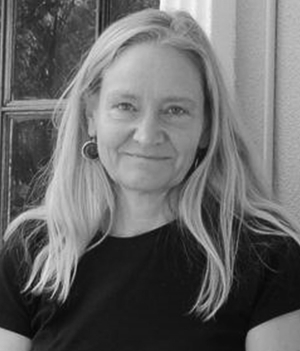
Kate Philip is a development strategist. She has extensive experience in the development sector as a practitioner and in policy development, focused on issues of economic marginalisation, inequality, employment and enterprise development. From within TIPS, this has included providing support to GTAC in National Treasury on regional economic development strategies, to the Economies of Regions Learning Network, and to the Integrated Wild Coast Development Programme. She has provided advisory support to the South African Presidency on issues of economic marginalisation, and played a central role in the design and development of South Africa’s Community Work Programme.
Through the International Labour Organization, she is currently supporting the government of Greece in relation to its public employment programme, Kinofelis, and regularly participates in teaching a course on Innovations in Public Employment for the International Training Centre of the ILO in Turin. She worked for many years in enterprise development in rural areas and small towns, as CEO of the Mineworkers Development Agency.
She has a PhD in Development Studies from the University of the Witwatersrand.