

Janet Wilhelm
Thandi Phele

Thandi Phele is the Acting Deputy Director General of Industrial Competitiveness and Growth Branch at the Department of Trade, Industry and Competition (the dtic). Since her appointment in the acting position, she has been providing thought leadership to South African industrial policy and driving key programmes aimed at industrialisation and localisation. Key among these, she continues to lead the development and implementation of various masterplans led by the dtic: Automotives; Retail-Clothing, Textiles, Footwear and Leather; Poultry; Sugar; Steel and Metal Fabrication; and Furniture.
She has been instrumental in the development and deployment of a number of industrial policy tools to various sectors, including designations and localisation under the Preferential Procurement Policy Framework Act (PPPFA); design of industrial financing support; beneficiation of South African mineral endowment; design and implementation of skills programmes to support the broader manufacturing sector; and standard and quality measurements.
Ms Phele has contributed to the core of the industrialisation agenda in South Africa over the past 16 years at the dtic. She has extensive policy knowledge of the steel, heavy industries and engineering as well as strategy development, implementation, monitoring and evaluation, which is her permanent role as a Chief Director: Metal Fabrication, Capital and Rail Transport Equipment sector desk.
Cross-cutting issues emerging from Master Plans
Industry Master Plans have emerged as an important industrial policy intervention and approach to strengthening and growing South African industrial capacity. The approach to and process of developing these plans has brought about a comprehensive understanding of specific industry dynamics, engagements between key stakeholders in an industry, and the actions required to strengthen and grow that industry. Developing the Master Plans involved research, engagement and collaboration between stakeholders to identify and support the actions required. The Master Plans aim to collectively reposition the economy rather than solve a specific crisis faced by an industry. This policy brief explores some of the tensions that have surfaced in the Master Plan process.
China’s Belt and Road Initiative (BRI) and its role in Africa is controversial. This paper argues that African countries should work through regional organisations, such as the African Union (AU) and the African Continental Free Trade Area (AfCFTA) to use their agency and negotiate with China to advance their own interests. The experiences of China in building regional corridors and supporting regional value chains and connectivity in Southeast Asia can provide valuable lessons for both Africa and China on how the BRI can contribute positively to developmental regionalism* in Africa.
* Developmental regionalism is defined as “cooperation among countries in a broader range of areas than just trade and trade facilitation, to include – for example – investment, research and development, as well as policies aimed at accelerating regional industrial development and regional infrastructure provision, such as the building of better networks of roads and railway” – UNCTAD.
The Real Economy Bulletin - Fourth Quarter 2020
Main Bulletin: The Real Economy Bulletin - Fourth Quarter 2020
In this edition
Gross domestic product: As forecast since the middle of 2020, the South African GDP in 2020 was 7% lower than in 2019. After the very sharp downturn during the lockdown in the second quarter, most of the real economy has largely recovered on the back of higher metals prices and more targeted measures to prevent COVID-19 from spreading. Still, economic growth was affected by the continued risk of contagion, which suppressed recovery particularly for in-door hospitality and entertainment. The factors that slowed growth before the COVID-19 pandemic also remain a challenge, although government has announced measures to address unnecessary red tape and infrastructure shortfalls more consistently through its Operation Vulindlela. Read more.
Employment: As usual with downturns, but on an unusually devastating scale, the recovery in jobs lagged the resurgence in the GDP. Total employment grew by 330 000 or 2.2% in the fourth quarter of 2020. But employment remained 1.4 million below 2019 levels because the economy shed some 2.2 million jobs in the second quarter. The decline over 2020 was greatest for lower-level workers in general and informal workers in particular, aggravating South Africa’s already sharp income inequalities. Read more.
International trade: The trade balance remained strong in the fourth quarter, largely because exports benefited from higher mining prices and auto exports. Manufactured imports also rebounded sharply. Read more.
Investment: Private investment flattened out in the fourth quarter of 2020 while public investment showed strong growth. The investment rate (investment as a percentage of the GDP) improved marginally from 15.1% of the GDP in the third quarter to 15.4% in the fourth quarter – still far below pre-pandemic levels. Returns on assets improved for mining and manufacturing in the third quarter, but fell for construction. Read more.
Foreign direct investment projects: The TIPS FDI Tracker tracks foreign direct investment projects on a quarterly basis, using published information.The total investment value from projects captured this quarter was R68.9 billion. Projects captured in the fourth quarter are a mix of those announced at the 2020 Investment Conference and others identified outside the conference. Read more
Briefing note: South Africa's emerging recovery strategy: From the day the lockdown started, government has contended that South Africa cannot simply go back to pre-pandemic days, when growth was already slow and inequality persistently high. Instead of a narrow recovery, then, it called for reconstruction, addressing the structural constraints on inclusive growth. There is, however, a huge gap in how different groups define and prioritise the structural constraints to growth. Read the briefing note online: South Africa's emerging recovery strategy.
TIPS Webinar - Unravelling South Africa's Just Transition: Unpacking sectoral interventions for Mpumalanga
Presentations
Nkosinathi Nkonyane - Senior Manager, Economic Policy and Planning, Department of Economic Development and Tourism (Mpumalanga Province)
Presentation: Implementing the Mpumalanga green economy plan
Louise Scholtz - Senior Programme Manager: Urban Futures, Policy and Futures Unit, WWF-SA; Carla Hudson, Programme Manager: Mine Water Coordinating Body, and Operational Lead – Mpumalanga, Impact Catalyst
Presentation: Mine rehabilitation as a platform for socio-economic development in Mpumalanga
Stanley Semelane - Senior Researcher in Climate Services, CSIR
Presentation: Just Transition and sectoral solutions
Gillian Chigumira - Economist, TIPS
Presentation: A Just Transition in Mpumalanga away from coal - Unlocking jobs in the agricultural sector
Belinda Heichler - President, South African Coal Ash Association; and General Manager, Kwikbulk
Kelley Reynolds-Clausen Vice-President, South African Coal Ash Association; and Eskom
Emerging opportunities for using coal ash
Media
Lameez Omarjee, Fin24, 29 March 2021: Can farming revive Mpumalanga's economy when coal power stations close? Read as a PDF.
FIN24, ESI Africa, 26 March 2021: No silver bullet but many ways to renew Mpumalanga’s economy
Terence Creamer, Mining News, 25 March 2021: Agriculture seen as key just transition enabler in Mpumalanga, but arable land needs urgent safeguarding
Additional research (Water Research Commission)
Practising Adaptive IWRM (Integrated Water Resources Management) in South Africa (July 2018)
Appendix A: Regulation throughout the coal mining life cycle
Appendix D: How to engage with coal mines through a Catchment Management Forum
Appendix E: Record of Upper Komati Catchment Management Forum (UKCMF) dialogues
Appendix F: Ecological infrastructure, mining licensing and contestation
Background
South Africa has initiated a transition to a more sustainable development pathway. This notably involves moving towards a low-carbon economy. In a highly unequal society like South Africa, the need for a just transition, which would empower vulnerable stakeholders, has emerged as an imperative. Vulnerable stakeholders (such as workers, small businesses and low-income communities) should not be negatively impacted by the transition and should ideally be better off through it.Just transition discussions in South African (and globally) have been primarily focused on the coal value chain, particularly coal-fired power generation and associated coal mining. In South Africa, the bulk of coal-related operations are concentrated in the Mpumalanga province, especially in eMalahleni (formerly Witbank) and Steve Tshwete.
International experience suggests that fostering a just transition requires long-term, ambitious interventions at multiple levels. South Africa's mix of measures remains in development and a high source of debate. This dialogue aims to inform this just transition process. After a presentation of the province's green economy plan, it explores a number of possible sectoral options to diversity and rejuvenate Mpumalanga's economy and foster a just transition process in South Africa, namely the potential to:
- Generate renewable energy-based electricity and manufacture renewable energy technologies;
- Foster the development of agricultural value chains;
- Use mine rehabilitation as a platform for socio-economic development; and
- Harness coal ash, a waste product of coal-fired power generation, to develop new economic activities.
Louise Scholtz will unpack the role of mine rehabilitation in Mpumalanga's just transition. Louise is Senior Programme Manager: Urban Futures Policy and Futures Unit at the World Wide Fund for Nature South Africa (WWF-SA). She is responsible for a basket of projects focusing on unlocking climate action at city level. She also manages a just transition workstream, which includes work on the potential of mine rehabilitation to support environmentally sound and equitable outcomes for communities.
Stanley Semelane will present on the potential to develop renewable energy (for electricity production and manufacturing) in Mpumalanga. Stanley is a Senior Researcher in Climate Services at the Council for Scientific and Industrial Research's (CSIR) Holistic Climate Change Impact Area, where he is responsible for supporting climate change finance as well as the mitigation and adaptation measures for a just transition in South Africa.
Gillian Chigumira will discuss opportunities associated with the development of agricultural value chains in Mpumalanga. Gillian is an Economist at TIPS. Her interests lie in industrialisation, agro-processing, urban regeneration, inclusive growth, conflict resolution and diplomatic negotiations in Africa. She has done extensive work on the development of agricultural value chains in South Africa and the Southern African region.
Belinda Heichler will present on the potential of using coal ash to support a just transition in Mpumalanga. Belinda is the General Manager of Kwikbulk, a company of Kwikbuild General Purpose Cement, and the President of the South African Coal Ash Association (SACAA).
About the Facilitator
Gaylor Montmasson-Clair is a Senior Economist at TIPS, where he leads work on Sustainable Growth. He has carried extensive research on the transition to an inclusive green economy from a developing country perspective, with a focus on policy frameworks, industrial development, just transition and resource security. He was one of the lead authors of South Africa's National Employment Vulnerability Assessment (NEVA) and associated Sector Jobs Resilience Plans (SJRPs).
Post COVID-19 industrial development projects
As South Africa responds to COVID-19 and aims to stimulate the economy and job creation post lockdown, an opportunity should not be missed to consider investing in new product markets which could increase the size and dynamism of the manufacturing sector. Such a package could contribute to arresting the current trend of deindustrialisation and shift the trajectory of the industrial base into new, sustainable growth areas and value chains. This would result in new factories, new downstream demand for primary and intermediate inputs, new export products, increased foreign exchange earnings, and importantly new direct and indirect long-term jobs.
Using the idea of “business unusual” TIPS economists put together a Post COVID-19 recovery programme in South Africa that could provide the impetus to arrest the current trend of deindustrialisation and herald in the beginning of a new generation of industrial activity. The study comprises a main consolidated report and the seven initial projects that have been identified.
Main consolidated report: Industrial development projects
Project one: Borehole drilling rigs
This project looks at the production of 100% local content borehole drilling rigs specifically engineered for small and medium enterprise drillers to service increased investment in groundwater access in South Africa and the African export market.
Project two: Industrial hemp
This project looks at commercial scale cultivation and production of de-hulled (possibly organic) hemp seeds for human consumption for the export market.
Project three: Polylactic acid (bioplastics)
This project looks at supporting the sugar industry through the domestic production of polylactic acid for export and downstream domestic value addition.
Project four: Containerised short sea shipping service
This project looks at creating a short sea shipping service to increase containerise intra-regional trade between South Africa, Mozambique, Tanzania, Kenya and their hinterlands.
Project five: Alternative fuel
This project looks at establishing a co-processing facility at a cement plant as a means to catalyse a broader waste beneficiation industry in South Africa.
Project six: Furfural and furfuryl alcohol plant (biochemicals)
This project looks at the commercial scale production of furfural and furfural alcohol from sugarcane bagasse for the local foundry industry and broader export market.
Project seven: Motocycle components
This project looks the production of Class A motorcycle components (only) for export to the African assembly and after-sales markets.
Elize Hattingh

Elize Hattingh joined TIPS in November 2020 as a Researcher: Sustainable Growth. She has a Master’s Degree in Sustainable Development and Management from Stellenbosch University’s School of Public Leadership in partnership with the Sustainability Institute.
Elize has been actively involved in promoting the sustainable development agenda for more than 15 years. Research work included a Future Fit Career Guide for University of Stellenbosch Business School during 2017. Her work at Fetola as Head of Business Development included research for seda and DSBD to develop a BDS and Incubator EcoSystem Map for South Africa (2018-2020). Her work in circular economy and biofuels was through her role during 2018- 2020 as the Executive Coordinator for Waste to Wing, a Switch Africa Green Project, funded by the European Union. During 2016-2018 she worked in Atlantis as the Incubation Manager at the South African Renewable Energy Incubator funded by seda STP. Her activist work through her own consultancy, Green Talent, focussed on promoting green jobs from 2010 to 2016. A key deliverable was the first Partnership for Green Economy Country study for South Africa
Elize was also a Green Tech SME (Local Green Entrepreneurs) business coach for The Innovation Hub (Maxum Business Incubator, BioPark and Climate Innovation Centre) (2014-2016). She actively supports youth and women SME business development support through business coaching and designing Social Entrepreneurship Incubators. She was instrumental in the development of the First National Bank Social Entrepreneurship Impact Lab in 2019. She was also the Executive Coordinator of the African Social Entrepreneurs Network (ASEN) in 2011-2012. Her work with Mhani Gingi provided a platform to set up the Women in Innovation Trade Fair, she was appointed as event Project Manager & Chairman of the WITF Steering Committee.
Low Carbon Transport - South Africa (LCT-SA) Project
Opportunities to develop the lithium-ion battery value chain in South Africa
The world of mobility is rapidly changing. The market for electric vehicle (EVs), in all their forms, is growing exponentially. Combined with technological disruptions in the energy space, the rise of EVs puts battery technologies at the core of sustainable development. Multiple technologies and chemistries, with their respective advantages and shortcomings, are competing in a market currently dominated by lithium-ion batteries (LIBs). Both South Africa’s government and industry have indicated their intention to position the local value chain as a key player in the mobility of the future. This is critical to ensure a just transition to e-mobility which would notably preserve, if not increase, job creation. Indeed, South Africa hosts a vibrant automotive manufacturing value chain. Like in the rest of the world, the domestic industry, however, produces internal combustion engine vehicles and components.
This research project explores the opportunities for South Africa to have a role in the LIB value chain. The main report and policy brief were prepared by TIPS on behalf of the Low Carbon Transport - South Africa (LCT-SA) Project. The project was initiated and funded by the United Nations Industrial Development Organisation (UNIDO). The TIPS team are: Gaylor Montmasson-Clair, Lesego Moshikaro and Lerato Monaisa. It was overseen by a Steering Committee comprised of Ashanti Mogosetsi (UNIDO), Marie Blanche Ting (UNIDO), Gerhard Fourie (Department of Trade, Industry and Competition – the dtic), Hiten Parmar (uYilo), Jenitha Badul (Department of Environment, Forestry and Fisheries – DEFF), Shahkira Parker (DEFF), Bopang Khutsoane (Department of Transport – DoT), Marleen Goudkamp (DoT), Minnesh Bipath (South African National Energy Development Institute – SANEDI), and Tebogo Snyer (SANEDI). Phillip Ninela (the dtic), Umeesha Naidoo (the dtic), and Mandisa Nkosi (UNIDO) acted as an internal technical task team.
Download Main Report or read report online
Download Policy Brief or read policy brief online
Media
Press release: Lithium-ion batteries offer an electrifying opportunity for South Africa
The world of mobility is rapidly changing. The market for electric vehicle (EVs), in all their forms, is growing exponentially. Combined with technological disruptions in the energy space, the rise of EVs puts battery technologies at the core of sustainable development. Multiple technologies and chemistries, with their respective advantages and shortcomings, are competing in a market currently dominated by lithium-ion batteries (LIBs).
Both South Africa’s government and industry have indicated their intention to position the local value chain as a key player in the mobility of the future. This is critical to ensure a just transition to e-mobility which would notably preserve, if not increase, job creation. Indeed, South Africa hosts a vibrant automotive manufacturing value chain. Like in the rest of the world, the domestic industry, however, produces internal combustion engine vehicles and components. This research report explores the opportunities for South Africa to have a role in the LIB value chain.
Background
This project comprises a main report and policy brief were prepared by TIPS on behalf of the Low Carbon Transport - South Africa (LCT-SA) Project. The project was initiated and funded by the United Nations Industrial Development Organisation (UNIDO). The TIPS team are: Gaylor Montmasson-Clair, Lesego Moshikaro and Lerato Monaisa. It was overseen by a Steering Committee comprised of Ashanti Mogosetsi (UNIDO), Marie Blanche Ting (UNIDO), Gerhard Fourie (Department of Trade, Industry and Competition – the dtic), Hiten Parmar (uYilo), Jenitha Badul (Department of Environment, Forestry and Fisheries – DEFF), Shahkira Parker (DEFF), Bopang Khutsoane (Department of Transport – DoT), Marleen Goudkamp (DoT), Minnesh Bipath (South African National Energy Development Institute – SANEDI), and Tebogo Snyer (SANEDI). Phillip Ninela (the dtic), Umeesha Naidoo (the dtic), and Mandisa Nkosi (UNIDO) acted as an internal technical task team.
See Policy Brief: Opportunities to develop the lithium-ion battery value chain in South Africa.
Tebogo Makube
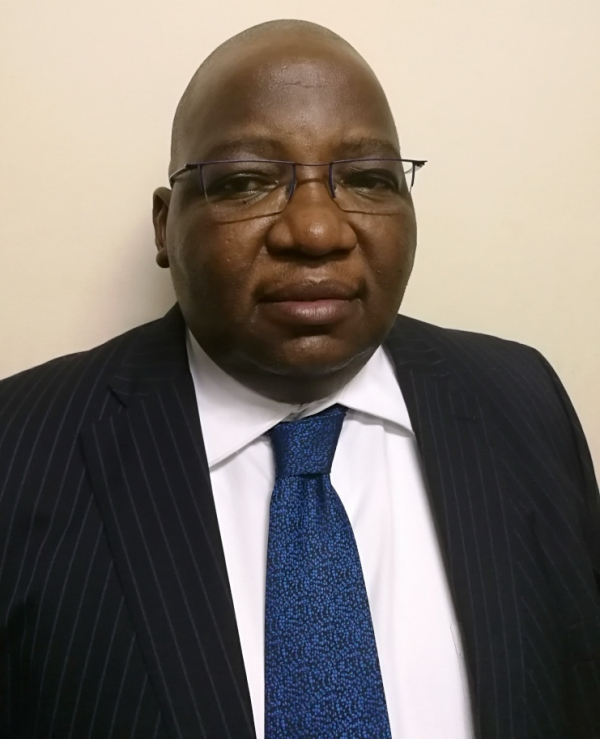
Dr Tebogo Makube is Chief Director: Industrial Procurement at the Department of Trade, Industry and Competition (the dtic). Before joining the dtic, Dr Makube was the Programme Manager: Fiscal Policy at the Financial and Fiscal Commission. Prior to that he was Director: Provincial Infrastructure at the National Treasury. He has also held research and management positions at the Gauteng Provincial Legislature, National Energy Regulator of South Africa (Nersa) and Nokusa Consulting. He is also a Board Member at Proudly South African.
Dr Makube holds a PhD in Energy Studies and other qualifications in Law, Economic Policy and Energy Economics.