

Janet Wilhelm
Beyond GDP

Official project name: Beyond GDP
Client: British High Commission and South African government (Department of Environmental Affairs, National Planning Commission, Department of Performance Monitoring and Evaluation, Economic Development Department)
Funder: British High Comission – Prosperity Fund
Duration: 1 February 2012 – 31 March 2012
Summary
In 2012, TIPS initiated research on Beyond GDP indicators of sustainability in South Africa with the financial support of the British High Commission. The project analysed whether gross domestic product (GDP) or alternative measures of welfare, specifically Real Wealth or Adjusted Net Savings (ANS), provide a better indicator of sustainable development, by evaluating the correlation of these measures with indicators representative of the South African government’s 12 Outcomes approach to performance management. The project provided a first-ever objective measure of government’s delivery on sustainable development, as well as providing a means for evidence-based policymaking towards a long-term sustainable economy, society and environment.
A Policy Brief was published in February 2012 to make the policy case for a tailor-made indicator of sustainable development for South Africa. A closed session of relevant governmental departments (such as the Department of Environmental Affairs, the National Planning Commission, the Department of Performance, Monitoring and Evaluation and the National Treasury) was organised at TIPS to present and disseminate the findings of the research.
Alternative Energy Generation for South Africa
Official project name: Alternative Energy Generation for South Africa
Client: Employment Promotion Programme Phase Two (EPP P2), Development Policy Research Unit (DPRU) at the University of Cape Town
Funder: Employment Promotion Programme Phase Two (EPP P2), Development Policy Research Unit (DPRU) at the University of Cape Town
Duration: 26.04.2010 - 26.07.2010
Summary
TIPS, in collaboration with PDG Consulting, carried out a research project in 2010 on alternative energy generation for the Development Policy Research Unit (DPRU) at the University of Cape Town. The project, which formed part of the Employment Promotion Programme Phase Two (EPP P2), included three components.
First, TIPS and PDG produced three input reports covering the following topics: alternative energy sources for South Africa and action plans to address barriers to implementation; alternative electricity generation strategies in developing countries; and policy for alternative energy generation in South Africa.
Second, a workshop aimed at assessing low-carbon electricity generation options for South Africa was hosted in June 2010 to discuss the research findings with relevant government, business and civil society stakeholders.
Third, a research and capacity building agenda for alternative energy generation in South Africa was developed based on the input papers and workshop discussions.
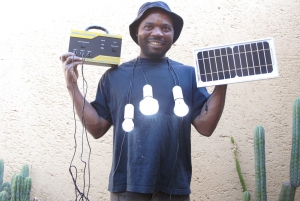
Photo: CommunityLED
University of Mauritius , WTO Chairs: Small Research Grants for Young Africans Call for Research Proposals
Abstract:
The International Energy Agency stated in its World Energy Outlook 2012 that global conventional crude oil production peaked in 2008. Total world oil exports have been stagnant since 2005 as oil exporting countries consume more of their own output and some battle against depletion. Unconventional oil production is growing, but the economic and environmental costs are large and the net energy return is very low. The Middle East North Africa region, home to the largest share of remaining oil reserves, is in political turmoil, threatening disruptions to oil supplies.
Within this context, oil importing countries such as South Africa need to prepare for oil price and supply shocks. This Development Dialogue will interrogate research being undertaken for the UK Department for International Development on "oil shock mitigation strategies for developing countries", with SA as a case study. The focus includes preparations for both short-term oil shocks (precipitated for example by geopolitical or extreme weather events) and long- term strategies to ensure energy and specifically liquid fuel supply security in a context of global oil depletion, declining world oil exports, falling energy return on investment, and increasing oil price volatility. This Dialogue is of relevance to not only to the energy sector, but also to transport, macro-economics, trade and industry, and agriculture.
About the speakers
Jeremy Wakeford: Dr Jeremy Wakeford is an economist specialising in energy and sustainability. He is a Senior Lecturer Extra- Ordinary in the School of Public Leadership at Stellenbosch University and consults to government departments, private sector clients and NGOs. He is currently leading a research project developing 'oil shock mitigation strategies for developing countries', commissioned by the UK's Department for International Development.
Bongani Motsa: Mr Bongani Motsa is a macro-economist specialist at the Department of Energy. He is part of the team that is developing the Integrated Energy Plan (IEP) for South Africa. Prior to joining the Department, he worked on African economic integration for Trade and Industrial Policy Strategies (TIPS). He holds a Master's degree in economics (majoring in econometrics) from the University of Pretoria.
Dr Saul Levin
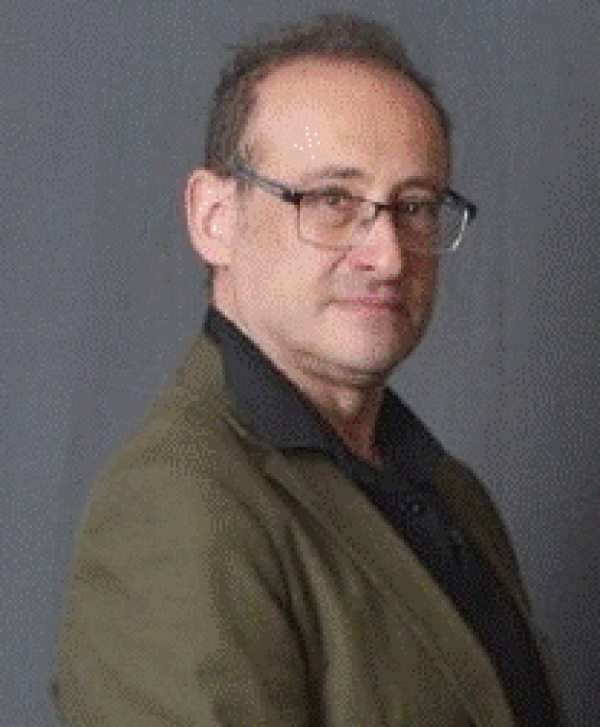
Dr Saul Levin joined TIPS in April 2013 and was appointed Executive Director in December 2014. He has a PhD in Development Studies from the University of Johannesburg, with his thesis on industrial financing. He has a Master’s and Honour’s Degree in Sociology as well as a BCom from the University of Witwatersrand.
Saul was previously a chief director in the Economic Development Department (EDD) with oversight of the Development Finance Institutions reporting to EDD, including the Industrial Development Corporation and the Small Enterprise Finance Agency. As part of his responsibilities he oversaw the merger of the small business finance entities and ran several projects to support small business development. He also worked as the chief of staff for Lindiwe Hendricks, heading her office while she was Minister of Water Affairs and Forestry and when she was Minister of Minerals and Energy. From 2001 to 2005 he worked as an economist in the office of the Deputy Minister of Trade and Industry. Prior to that Levin spent almost five years working in the field of enterprise development, as a project manager for government agency Ntsika (now Small Enterprise Development Agency).
From 2009 to 2011 Levin was as a senior manager at Standard Bank, working as a Business Operations Manager in the Corporate Affairs
GIS Mapping
Community mapping is a visual way of telling a community’s story. It is a powerful new tool to assist with participatory planning, as well as enabling a participatory approach to monitoring and evaluation. The TIPS GIS Mapping Team has assisted four Community Work Programme sites to pilot the mapping of the work they do. See www.tipsgis.com
The TIPS GIS Mapping Team provides a comprehensive mapping and GIS support service. We can successfully and accurately execute your GIS-related projects.
Our working model includes:
• Quality solutions and services
• Training and skills transfer
• Setup – GIS design, planning and implementation
• Project management
• Database design and management
• Data-processing and analysis
• Spatial analysis and modelling
• Monitoring and on-going support
• Subscription based service for on-going support is available
CONTACT
For more information, please contact Rozale Sedwuth at rozale@tips.org.za
EXPERIENCE
Community mapping is a visual way of telling a community’s story. It is a powerful new tool to assist with participatory planning, as well as enabling a participatory approach to monitoring and evaluation.
The TIPS GIS Mapping Team has assisted four Community Work Programme (CWP) sites to pilot the geographical mapping of all the projects they manage as part of their work.
See www.tipsgis.com
PEP general meetings are international events that gather hundreds of participants – development researchers, practitioners, lead experts and policy stakeholders - from around the world, who travel to learn and share knowledge on the most recent methodologies, concepts and findings in the analysis of policy issues related to poverty, economic and social development.
Strengthening research capacities in developing countries
These meetings are, for instance, the perfect occasion for PEP-affiliated resource people and international experts to provide hundreds of developing country researchers with intensive training in the use of the most updated analytical tools, concepts and methodological innovations fostered through the network's supported research and initiatives.
Following training sessions, attending researchers are invited to present either new research proposals - or latest reports from their currently funded PEP research project - to fellow researchers and PEP evaluators.
To all attending participants, and especially developing country researchers, PEP meetings present a unique opportunity in terms of peer-review and international networking experience.
Bridging research to policy
PEP general meetings also usually feature a one- or two-day policy conference (or plenary sessions), to present and discuss the policy implications of PEP research and analytical approaches. These presentations are thematically focused in accordance with current or emerging development policy issues, and several relevant stakeholders (policymakers, international institution representatives, etc.) are invited to both attend and participate in.
As they provide an opportunity for international participants of both academic and government affiliations to debate on the issues at hand, these conferences thus contribute to bridging the gap between research and policy when defining options to address poverty issues and promote development in the South.
For more information go to: http://www.pep-net.org/events/event/article/10th_pep_general_meeting_in_south_africa/
TIPS IS PROJECT MANAGING AND COORDINATING THE CONFERENCE FOR PEP
Natasha Du Plessis
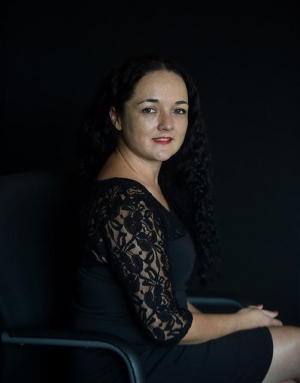
Natasha joined TIPS in February 2013 as a Project Coordinator. She holds a Diploma in Office Administration and Personal Assistant, a Diploma in Business Computing and has a certificate in Project Management. She has over 13 years’ experience in administration including project administration and coordination, logistics management, contract management, customer relations, staff supervision, office management and operations, and personal assistant duties at both local and international level. She has extensive experience in office operations and managing conferences at a national and international level.
Before joining TIPS she was employed at CIDA (Canadian High Commission Funded) and she was also with the City of Tshwane Municipality.
Natasha is currently studying towards a BTECH degree in Office Administration at UNISA.
CALL FOR PAPERS
3rd International Conference on International Trade and Investment
Special Conference Theme:
'Non-tariff measures, the new frontier of trade policy?'
4-6 September 2013, Mauritius
Organized by the University of Mauritius (UoM) and the WTO Chairs Programme (WCP)
Even though import tariffs have declined globally owing to the demands from the multilateral rounds negotiations and the proliferating preferential agreements, Non-Tariff Measures (NTMs) have risen significantly in recent years and have become a concern for competitiveness. While many of the NTMs have been designed to achieve legitimate goals such as protecting public health and the environment, they can impede trade via impaired competitiveness because they constrain the ability of firms to outsource key inputs, complicate day-to-day business and distract managerial attention. Firm surveys highlight private-sector demands for more transparency in the adoption and application of NTMs across countries. Furthermore, most studies on the impact of African and other regional initiatives have highlighted the negative dimensions of NTMs adopted by individual members to the various RTAs and which are significantly hampering any trade creating potential.
Kindly see attached for more info.